Connected Operations™ Transforming the way the world moves forward
.What are Connected Operations?

Physical operations are the backbone of the global economy.
What are physical operations? Think transporting goods and services, building infrastructure, keeping utilities running and more. To function best, these organisations all rely on the safe, efficient, and sustainable operation of physical assets – such as warehouses, vehicles and equipment
.
Connected Operations is the next evolution.
Organisations that manage physical operations are using digital technology to connect their assets in the cloud, transforming them into Connected Operations. This provides organisations with real-time visibility, so they can operate more safely, efficiently and sustainably.

Watch Video
Overview
Empowering teams with Connected Operations.
Learn how the people at the heart of our global economy are using real-time data to transform physical operations into Samsara Connected Operations™.
journey
Before the Industrial Internet of Things (IIoT)
Despite their importance, physical operations have historically been underserved by technology. Many still relied on paper documents, manual processes, and siloed systems – causing inefficiency and impacting profitability.

Industries
How are different industries connecting their operations?
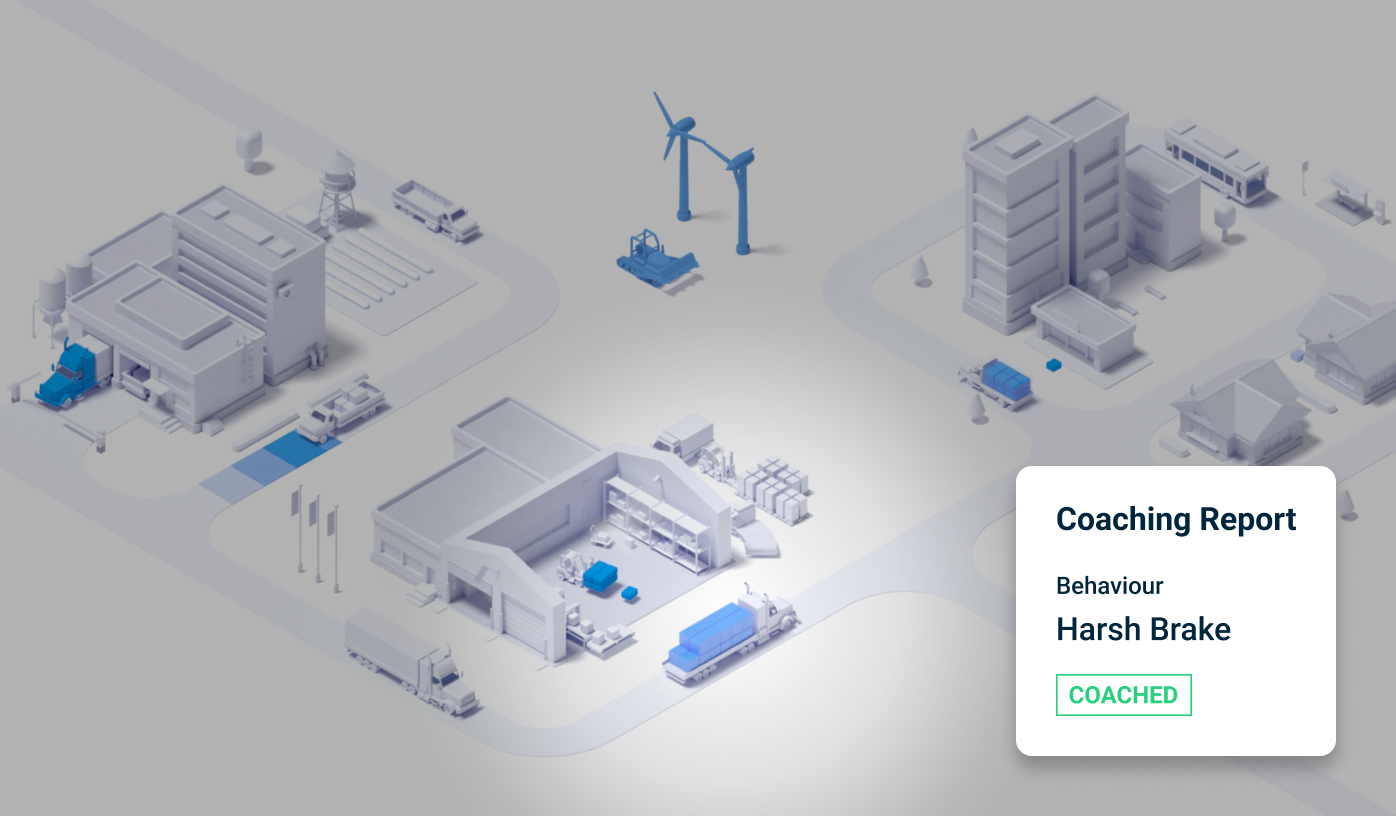
On the road, AI cameras alert drivers to safety risks such as speeding, tailgating and harsh braking in real-time - preventing incidents before they happen and providing footage for coaching and exoneration. At facilities and warehouses, AI site cameras protect employees from onsite threat and operations hazards.


Customer Spotlight
Hear what industry leaders have to say.


Discover how leaders in Connected Operations are using AI to outperform their competition.
With perspectives from 1,500+ leaders across seven countries and 21 industries, our latest State of Connected Operations Report reveals AI use cases and benefits across physical operations.
51%
ARE ALREADY USING AI WITHIN THEIR OPERATIONS TODAY
87%
EXPECT TO INCREASE THEIR AI INVESTMENTS IN THE NEXT YEAR
90%
REPORT THAT THEIR EMPLOYEES FEEL POSITIVE ABOUT AI
REPORT
Smarter, Faster, Safer: The AI Revolution in Physical Operations
Download our latest State of Connected Operations Report to learn how leaders around the world are harnessing AI to empower their workforce and unlock new efficiencies.
Download Report
FAQs
Get your questions answered.
Physical operations are the organisations that power our economy through the flow of goods and services. Physical operations exist across many industries, including construction, transportation and logistics, field services, home and commercial services, food and beverage, local government, passenger transit, healthcare, utilities and more. What unites these vastly different organisations under the umbrella of “physical operations” is the nature of their work; they all rely on the safe, efficient and sustainable operation of physical assets – such as warehouses, vehicles and equipment – to function.
Physical operations form the backbone of our global economy, representing over 40% of global gross domestic product (GDP). Yet despite their immense impact, these organisations and the people they employ – drivers, field technicians, safety managers, warehouse supervisors – have historically been underserved by technology.
Before the widespread adoption of IIoT (industrial internet of things) technology, physical operations relied on paper documents, manual processes and siloed systems. This caused massive challenges such as a lack of real-time data, limited visibility into operations, manual and error-prone workflows, and disparate applications and systems.
Now, that is changing. As advances in technology make it possible to capture more data from more assets and connect it to the cloud, we are seeing physical operations digitise and transform into Connected Operations.