Perspectives
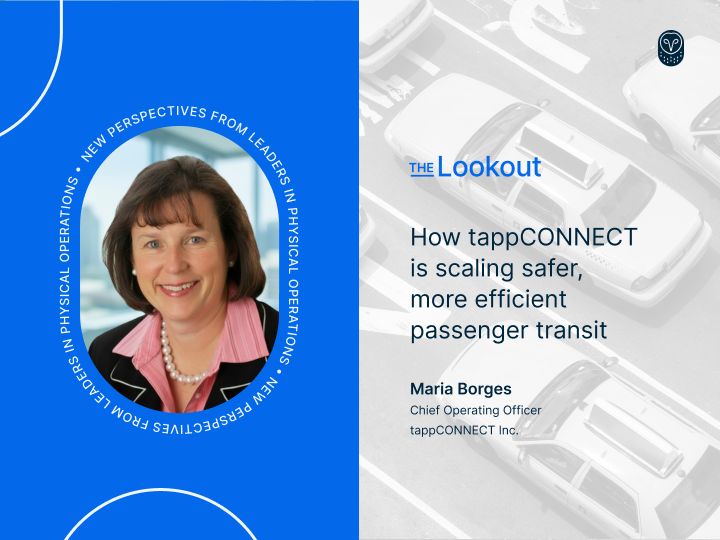
How tappCONNECT is scaling safer, more efficient passenger transit
April 24, 2026

Chief Operating Officer, tappCONNECT
Get the latest from Samsara
Subscribe nowAs Chief Operating Officer at tappCONNECT, I oversee operations across a large, complex transportation network serving the Greater Edmonton Area. Our services span taxi, limousine, non-emergency medical transportation, and contracted services supporting assisted living partners—all delivered through a fleet of more than 500 vehicles operating 24/7, 365 days a year.
At that scale, the challenge isn’t just growth—it’s maintaining consistent, safe, and reliable service across very different types of operations. What works for one part of the business doesn’t always translate to another. Adding to that complexity, we also run a maintenance and repair shop, which requires an added layer of coordination.
We’ve always had a strong safety foundation. As a COR-certified organization, our approach has long been built on regular inspections, a joint health and safety committee, and clear driver protocols. But as we expanded, particularly into government contracts and non-emergency medical transportation, it became clear that those systems needed to evolve to keep pace with the business.
Over the past few years, we’ve implemented both real-time video and telematics across our fleet. That shift has allowed us to move from a strong foundation to a more proactive, data-driven model—giving us better visibility, clearer accountability, and stronger protection across the business.
Here are five practices that guided our transformation.
1. Manage rising insurance costs through data
For many transportation companies, insurance is one of the most unpredictable—and expensive—parts of the business. We’ve felt that pressure firsthand.
In Alberta, the shift to the Direct Compensation–Property Damage (DCPD) no-fault system changed how claims are handled. In practice, fleets often absorb costs even when they’re not at fault. In Edmonton, winter conditions add another layer of complexity, with more frequent collisions and a higher number of incidents involving uninsured or unidentified drivers.
We implemented Samsara initially to meet insurance requirements, but it quickly proved to be far more valuable. With access to real-time video and telematics data, we’re able to assess incidents with far greater clarity. We can work more closely with our insurer, and we’ve enabled API access so partners can review data quickly and efficiently. Internally, that same visibility allows us to take a more proactive approach to coaching and risk management.
The results have been meaningful. We’ve reduced incidents year-over-year from 2025 to 2026. We now have the data to support more informed—and more productive—conversations around risk and insurance costs.
2. Overcome pushback with transparent communication
Introducing in-cab cameras is a significant shift, and some resistance is expected. One of the first concerns we heard from drivers was about in-cab audio alerts. Many felt the voice warnings were too loud and could disrupt the passenger experience. We took that feedback seriously and used it as an opportunity to explain how the alerts function. If drivers can’t hear them, they lose an important real-time signal when unsafe behaviours occur.
We leaned heavily on communication throughout the rollout. Through town halls and ongoing conversations, we focused on being clear about intent: this technology is there to support and protect drivers, not to monitor them unnecessarily. As drivers began to see how video could resolve disputes and protect them from false claims, the conversation began to shift, and fairly quickly.
At the same time, expectations remained consistent. This technology is part of how we operate and tied to our insurance requirements. We supported drivers through the transition with time, coaching, and guidance. Over time, that balance of transparency and accountability helped build trust across the organization.
3. Keep drivers moving with faster incident response
Our incident management process used to be largely reactive. When something happened, drivers were required to return to the office and complete a paper-based report. That process could take two to three hours—and pulls drivers off the road. For them, that time has a direct impact on their work.
Today, that process looks very different. With real-time video alerts, our dispatch team is notified immediately when an incident occurs. We can check on drivers, coordinate support, and respond without delay. If emergency services are needed, we can act quickly. Just as importantly, drivers can get back on the road safely with minimal disruption to their day.
This level of visibility is especially important in Edmonton, where winter weather increases both the frequency and complexity of incidents. Looking ahead, there’s an opportunity to build on this further. As AI capabilities continue to evolve, the focus is shifting from responding in real time to anticipating and preventing incidents before they happen.
4. Build a culture of driver accountability and recognition
We take a balanced approach to performance by combining coaching with recognition. For drivers who need support, we run a 90-day high-risk coaching program focused on improving specific behaviours. Early on, some drivers questioned whether events were accurate. Reviewing their own dashcam footage helped address that quickly, shifting conversations from opinion to something objective and actionable.
At the same time, we make a point of recognizing strong performance. We recently raised our target safety score from 80 to 85, and drivers who meet or exceed that threshold are entered into a monthly rewards program. We also highlight top performers in a monthly newsletter.
Today, 141 of our drivers maintain a perfect safety score. Some drive more than 11,000 kilometres a month without a single infraction. Recognizing that level of performance—and encouraging peer mentorship—helps reinforce what strong performance looks like across the organization.
5. Protect drivers and support the community
When you transport the public, unpredictability comes with the territory. Drivers regularly navigate difficult situations, including false complaints or unsafe conditions, particularly during late-night shifts.
Dashcams have changed how we handle those situations. Instead of relying on conflicting accounts, we can clearly understand what happened and ensure drivers are treated fairly. That clarity matters—especially when drivers are dealing with false claims or high-risk situations. We’ve also implemented a panic button so drivers can alert dispatch immediately in an emergency, giving them an added layer of protection.
With more than 500 vehicles on the road, our fleet is constantly moving throughout Edmonton. That presence gives us a role to play beyond our own operations. We’ve worked with local law enforcement by providing footage that helps clarify incidents and support investigations.
Ready to take your operations to the next level? Schedule a demo to see how connected operations can drive real impact—or log in to unlock more value from your existing Samsara platform.
Get a demoGet the latest from Samsara
Subscribe nowRead more

How TST-CF Express uses automated coaching and daily accountability to improve safety and cut idling

Senior Manager, Safety and Compliance at TST-CF Express

How Sobeys modernized national fleet maintenance and unlocked actionable insights with AI

National Fleet Manager, Sobeys

Using technology to improve compliance, equipment tracking, and safety across Western Canada

VP of Fleet Services, Freight North Group of Companies

How Sunrise Farms’ Director of Fleet and Livehaul led digital transformation with a lean team

Director of Fleet and Livehaul, Sunrise Farms
Why thousands of companies in the retail industry choose Samsara

EVP, Chief Operating Officer - GTM

Canada’s most dangerous winter roads

Head of Insights

How American Iron & Metal strengthened their safety culture and reduced accidents by 85%

Manager Transportation Safety & Compliance, American Iron & Metal

Caron Transportation Systems’ Dieter Blank on why safety starts with smart tech

Sr. Director, Customer Marketing

Sterling Crane Canada on transitioning to proactive maintenance to overcome harsh conditions

Regional Maintenance Manager, Sterling Crane Canada