Delisle Group strengthens fleet safety and incident response efficiency with Samsara
Standout Benefits:
500 cameras deployed across the fleet, with a total objective of 1,000
Claims-to-premium ratio reduced from approximately 98% to 50% within one year
Liability claims frequency reduced from 0.18 to 0.15 within one year
A long-established industrial transport operator facing rising claims costs
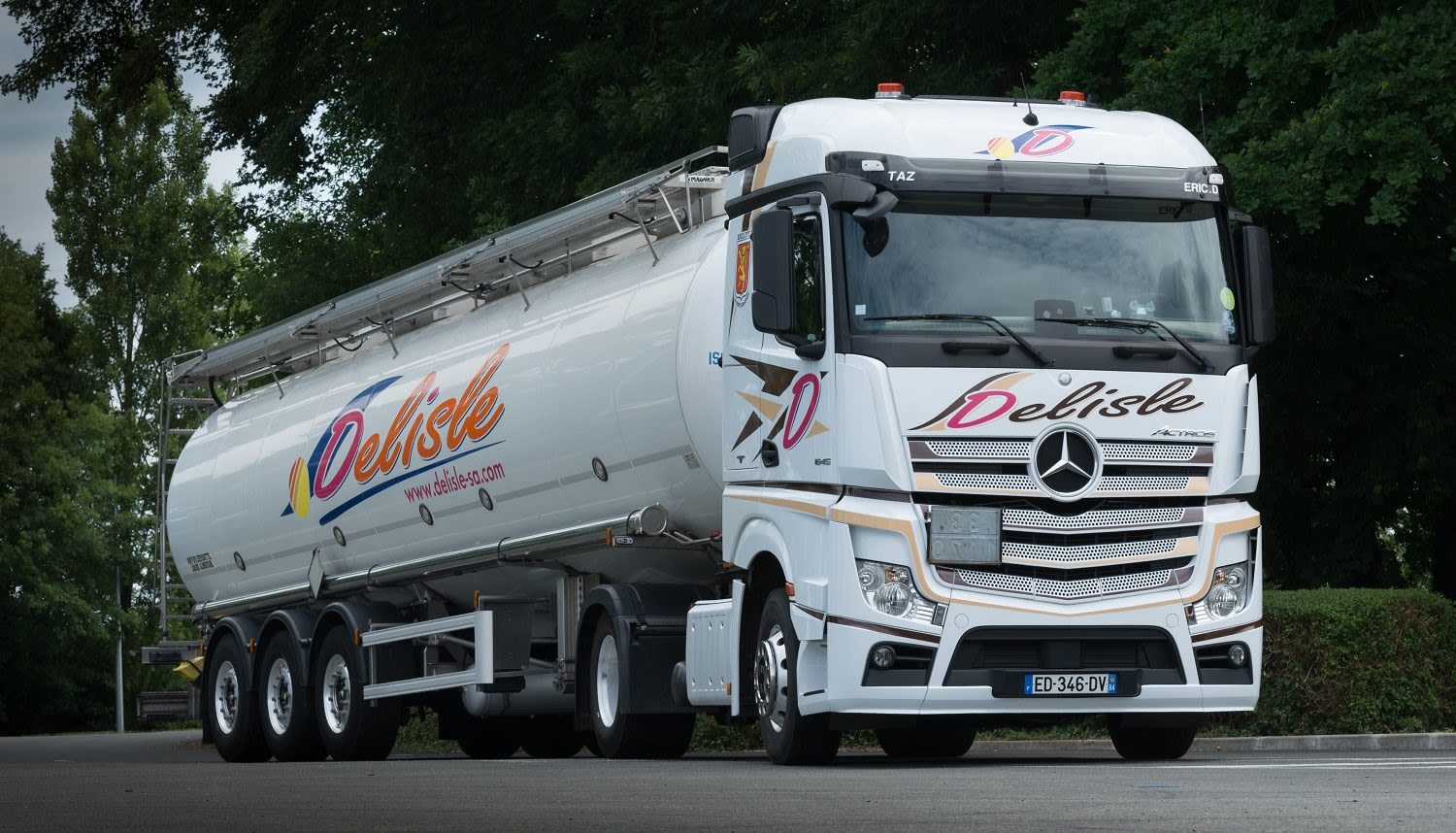
Founded in 1977, Delisle Group is now a major transport operator in France, with nearly 1,600 employees, operations across 30 sites and a fleet of approximately 3,000 registered vehicles. Its business primarily focuses on industrial and food bulk transport, complemented by logistics operations and tanker cleaning stations.
In 2023, the group faced a sharp increase in claims activity during a period of integration of new drivers and rapid growth. The immediate consequence was a 20% increase in its fleet insurance premium.
“We were facing multiple challenges: regaining control over our claims record while also being able to provide factual evidence to our insurer,” explains Cédric Morinet, Insurance and Legal Director at Delisle Group.
Beyond the financial impact, management quickly identified a broader need: better understanding accidents, protecting drivers, and structuring driving practices across the group.
Dash cams and data: bringing objectivity to claims and protecting drivers
The Samsara project was initially driven by insurance considerations. The objective was clear: obtain tangible evidence to analyse accidents, accelerate claims handling, and reduce unjustified liability claims.
The onboard cameras make it possible to accurately reconstruct the circumstances surrounding an incident, clarifying situations that may otherwise be incorrectly reported through human testimony.
“Video provides indisputable evidence. It allows us to quickly exonerate our drivers when they are not at fault,” says Cédric Morinet.
In the most critical situations, this capability proves decisive. Following a serious accident involving a third party, footage enabled law enforcement authorities to immediately establish that the Delisle driver was not at fault, avoiding a lengthy procedure for the driver involved.
Beyond claims management, the system also improves operational responsiveness. Automatic alerts in the event of a serious incident enable teams to react quickly and, if necessary, contact emergency services without delay.
A powerful lever for training and building a stronger safety culture
Over time, Samsara has evolved beyond its initial role to become a genuine safety management tool. Data collected through sensors and driver scoring helps identify risky behaviours and supports driver training programmes. The group has implemented a long-term approach combining individual analysis with collective improvement initiatives.
“The goal is not to punish, but to support our drivers. We use the data to help them improve and to better structure our training programmes,” adds Cédric Morinet.
This approach is helping establish a more consistent safety culture across a group operating a wide range of transport activities and business lines.
A phased deployment designed around operational realities
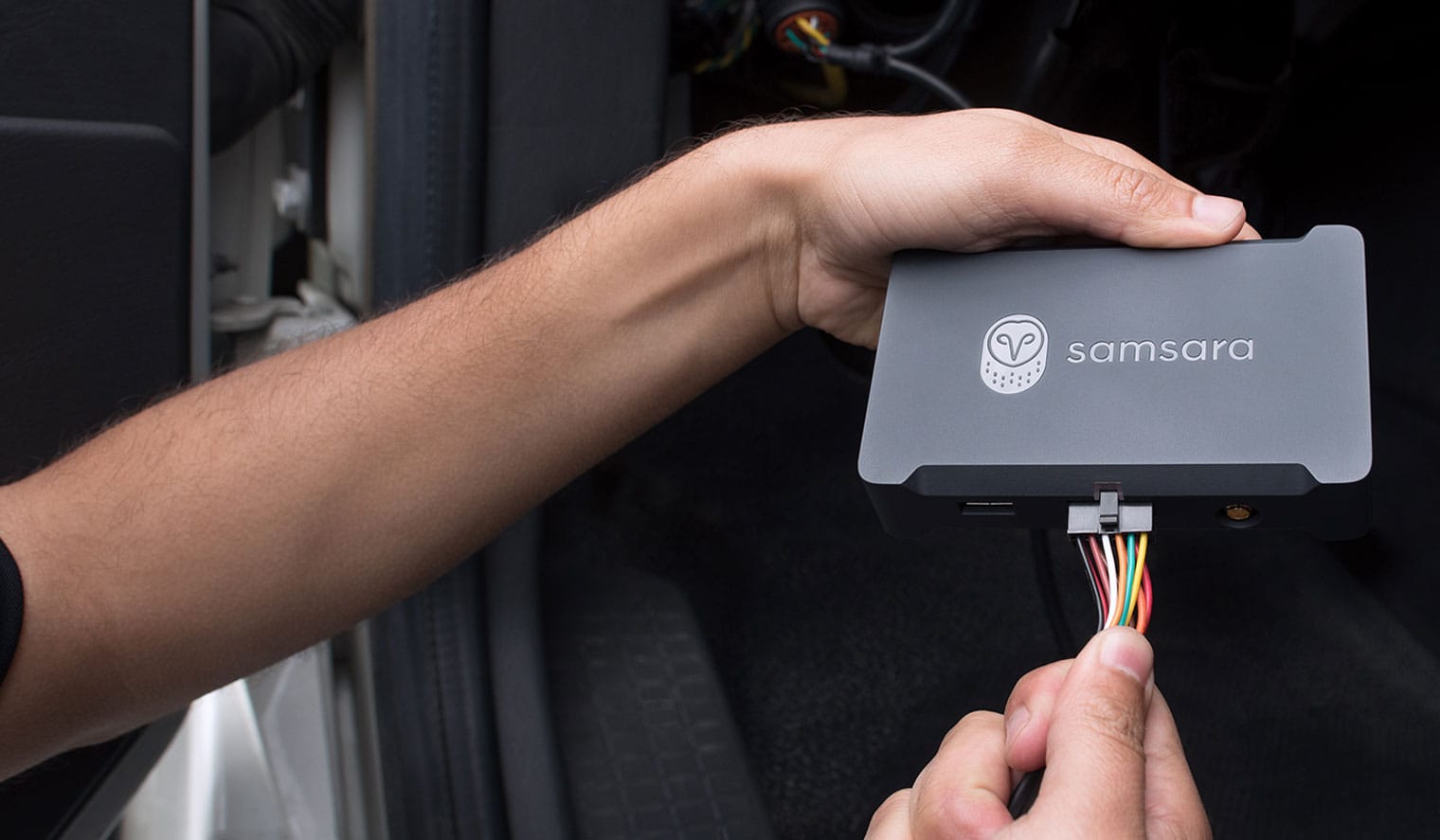
Deployment began in 2025, using a pragmatic approach tailored to the operational realities of long-haul transport. Rather than rolling out the solution all at once, Delisle chose a phased deployment in batches of 200 cameras, with installation cycles spread over time. This approach makes it possible to accommodate operational constraints and vehicle availability.
In less than a year, 600 cameras were ordered and nearly 500 installed, with a long-term target of 1,000 units deployed across the fleet. This gradual rollout was accompanied by extensive internal communication and change management efforts. “Transparency with our drivers was essential from day one. By being clear about how the technology would and wouldn't be used, we created the conditions for genuine buy-in which is what made the rollout a success ,” stresses Cédric Morinet.
Immediate impact with tangible early results
One year after deployment began, the first impacts are already becoming visible in the group’s performance indicators.
The claims-to-premium ratio, a key metric for insurers, improved significantly, dropping from approximately 98% to around 50%. Several factors contribute to this improvement, but the impact of dash cams and operational data is already becoming apparent. “We are clearly seeing improvements, and Samsara is obviously contributing to them. What we can concretely observe is a change in driver behaviour and a much better understanding of incidents,” notes Cédric Morinet.
From the insurers’ perspective, interest in these technologies is growing, even if the market is still in an observation phase regarding large-scale deployments.
A tool that has become central to risk management
Today, Samsara has become a core component of Delisle Group’s risk management strategy.
Beyond simply reducing claims, the platform helps professionalise the entire management chain: incident analysis, training, insurer communication, and driver support.
“We have moved from a declarative approach to a factual one. It is fundamentally changing the way we manage safety,” concludes Cédric Morinet.
Similar posts like this