Public Sector Report
Plan, Act, Recover: Disaster Preparedness in the US Public Sector
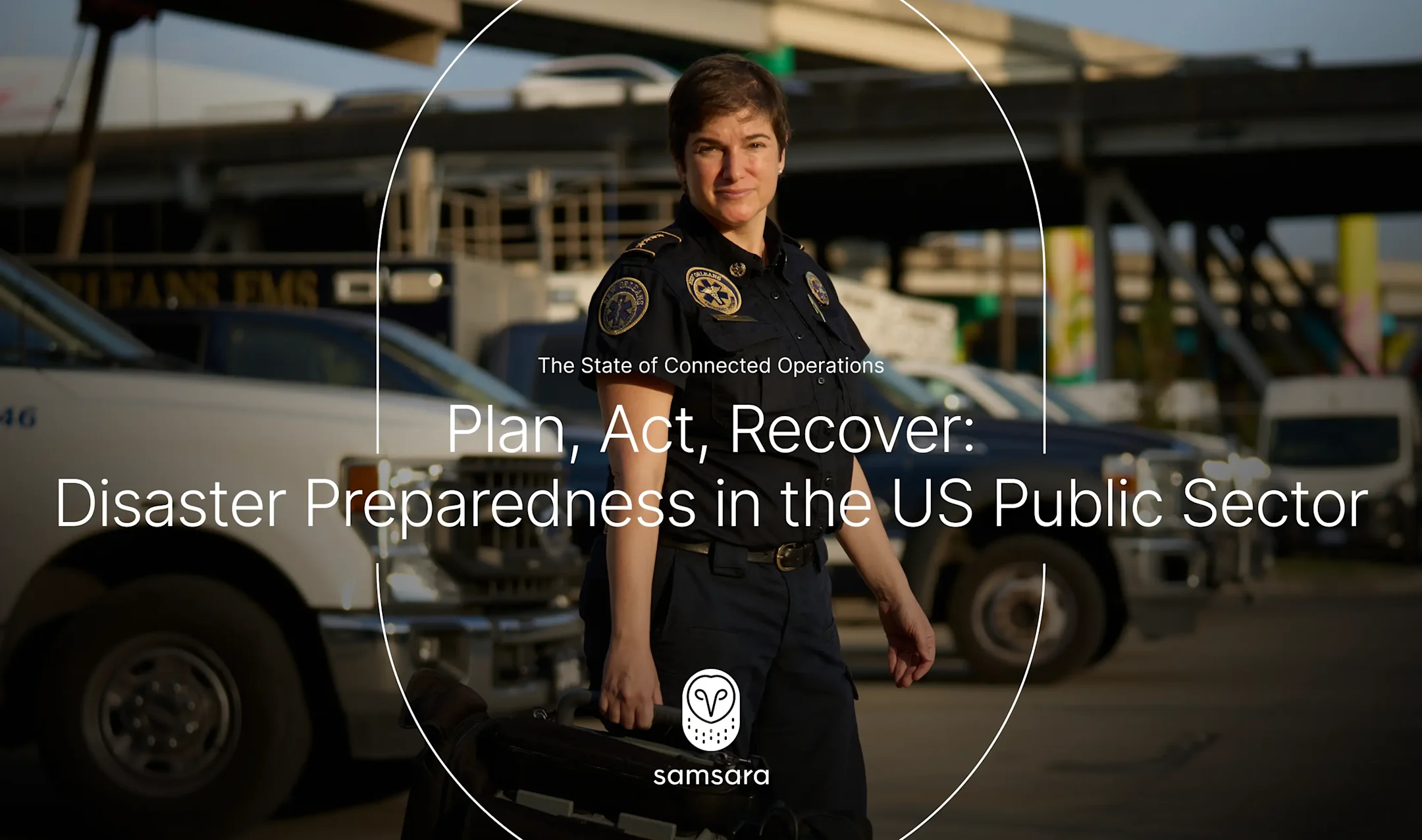
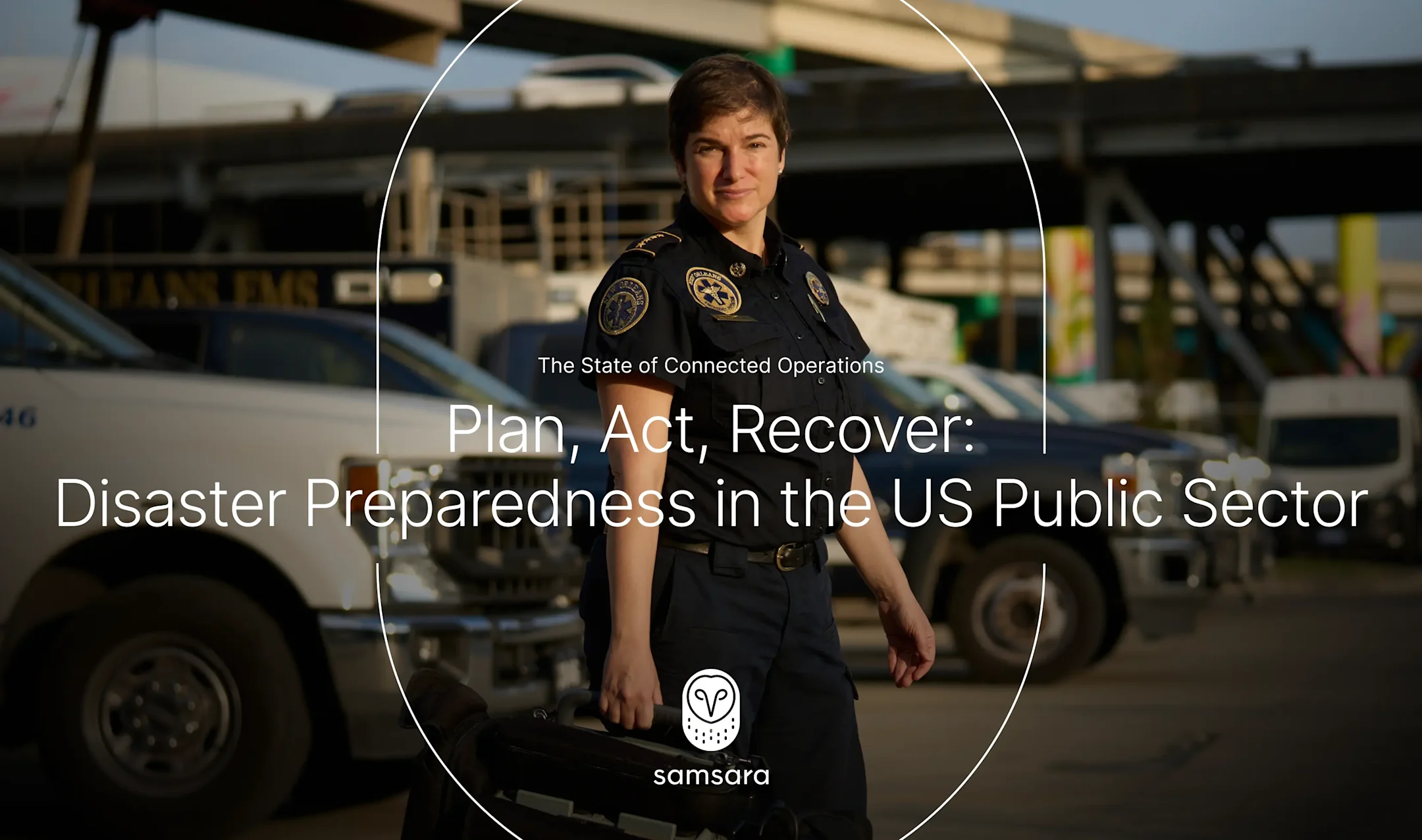
Public sector agencies are under pressure to be ready for the unexpected, from infrastructure failure to public health emergencies, while ensuring the well-being of their communities. This report provides an in-depth look at emergency preparedness from the perspective of public sector leaders, offering actionable insights for building truly resilient operations.
A preview of what’s inside
Preparing for crises: What government leaders are telling us about their disaster preparedness
What’s inside:
• Insights from a third-party survey of 250 emergency management personnel in the US Public Sector.
• An analysis of the preparedness gap and the challenges agencies face with visibility, connectivity, and resource allocation.
• Data on how technology, including AI, is set to reshape emergency response and management over the next five years.
• A tailored risk assessment checklist to help your agency create specific, effective emergency plans.
What you’ll learn:
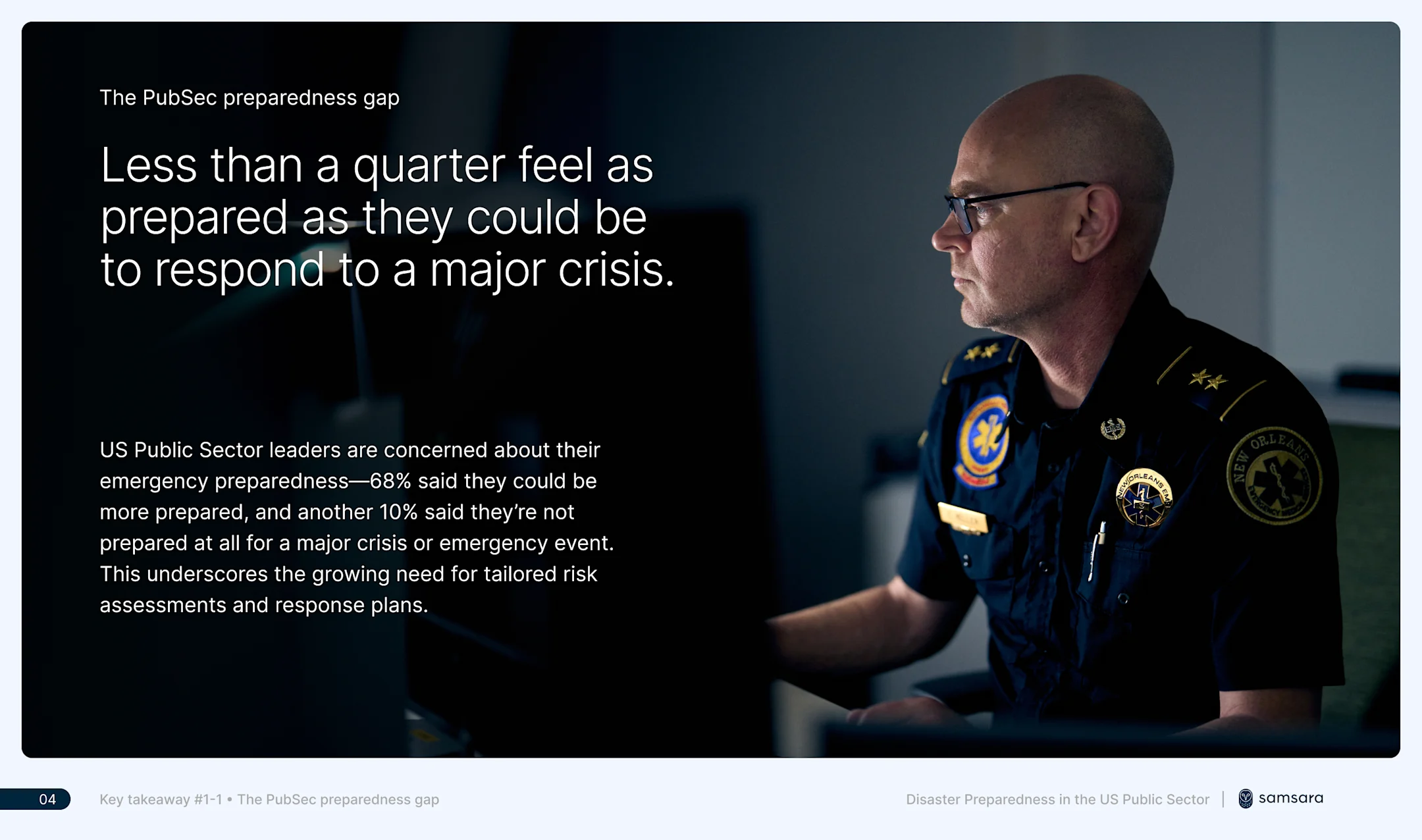
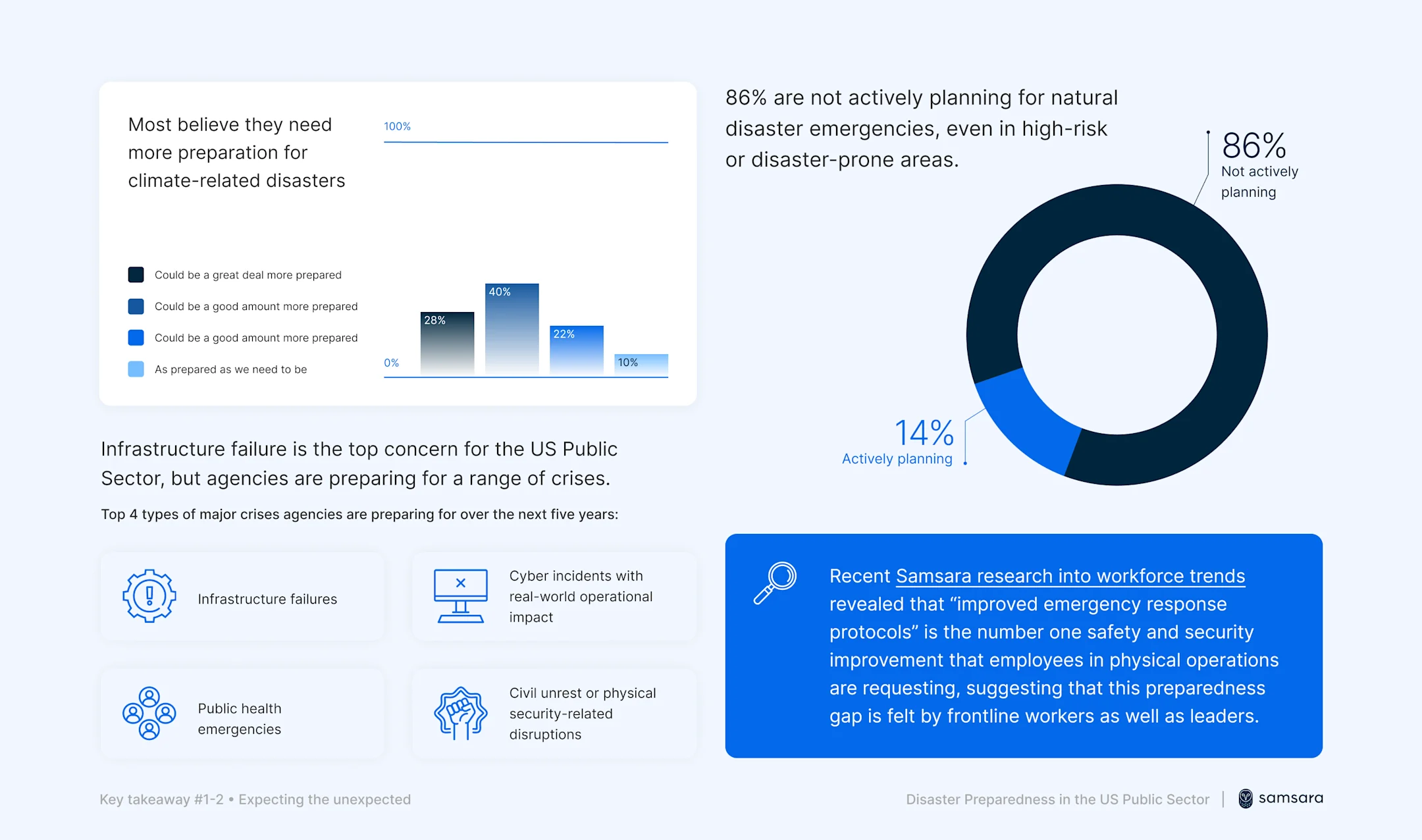
The vast majority of agencies in high-risk zones are underprepared for major crises
86% of US Public Sector agencies are not actively planning for major crises in high-risk or disaster-prone areas. By failing to close this critical preparedness gap, agencies risk major financial setbacks and extended recovery times that severely impact their constituents
Improving real-time visibility can prevent significant financial losses
A substantial 98% of leaders report that their inability to locate critical assets during a crisis has resulted in financial losses. Prioritizing technology that provides real-time data on the location of emergency vehicles and equipment helps minimize asset loss and safeguard budgets.
Strong planning accelerates the return to operations and normalcy for citizens
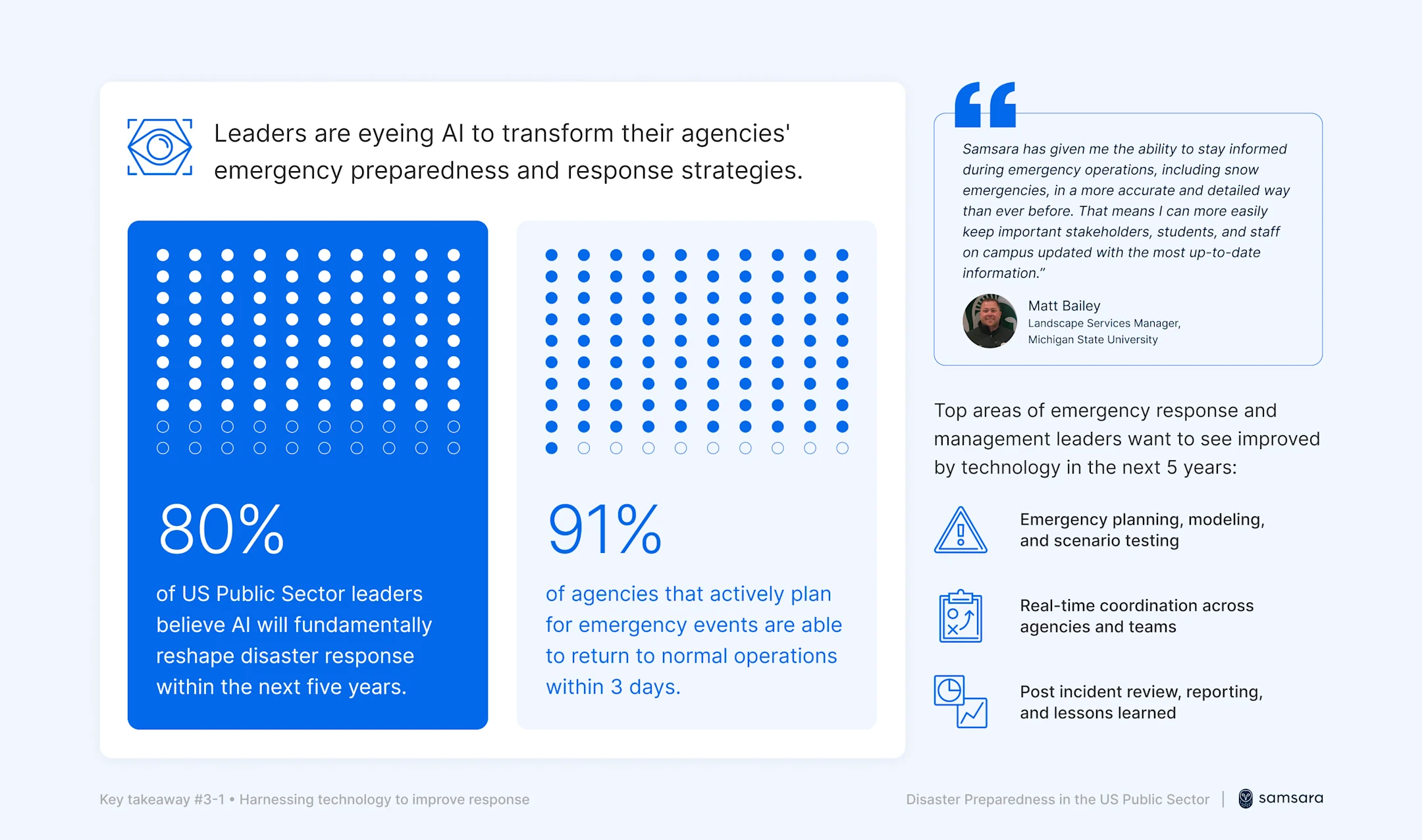
Agencies that actively plan for emergency events are significantly better prepared for the aftermath. 91% of these agencies are able to return to normal operations within 3 days of a disaster, underscoring the benefits of proactive and comprehensive response strategies.
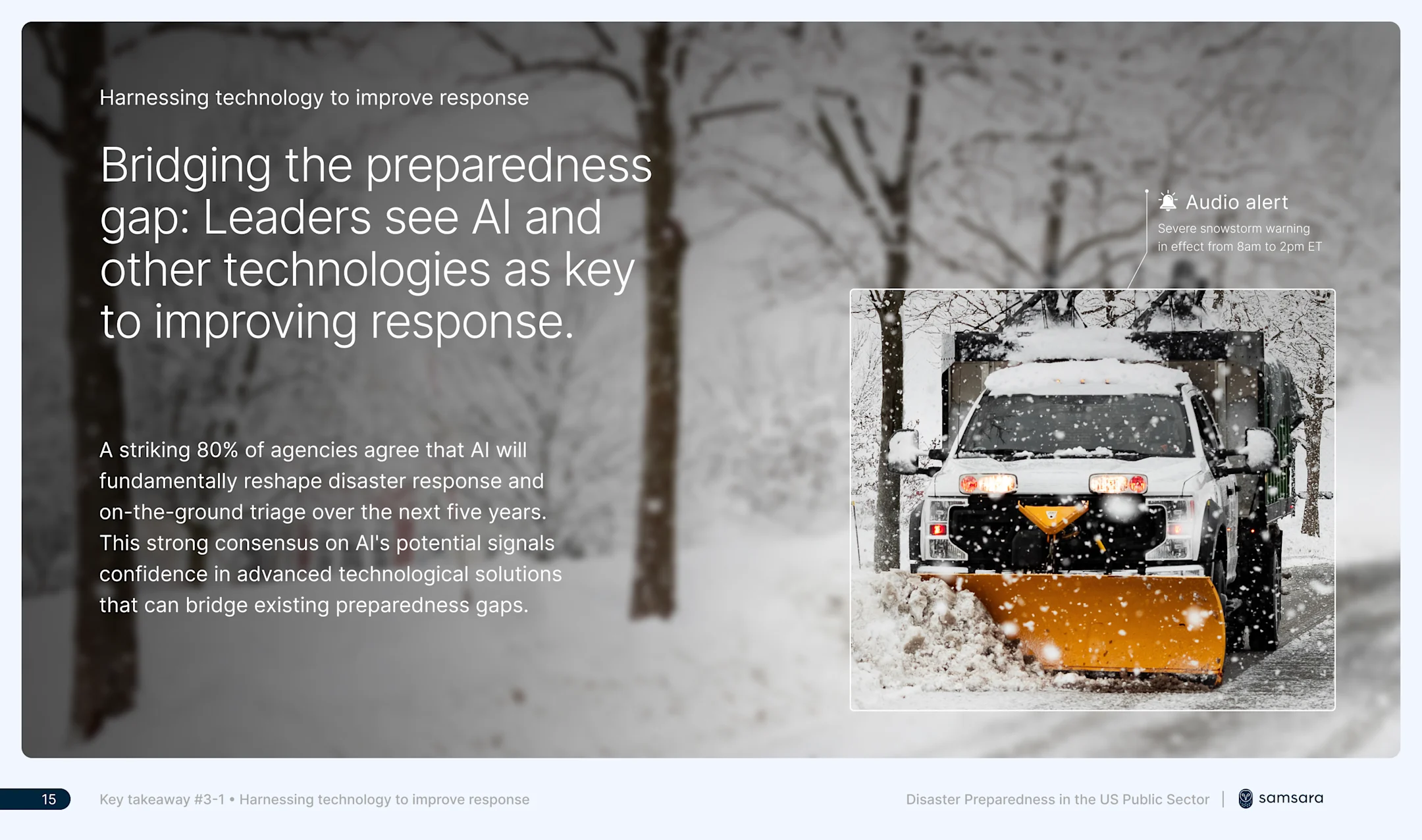
Adopting AI will fundamentally reshape and improve future disaster response
A striking 80% of agencies agree that AI will fundamentally reshape disaster response and on-the-ground triage over the next five years. This consensus signals confidence in advanced technological solutions that can transform capabilities in areas like early warnings, real-time coordination, and post-incident review.
Ready to turn insights into action and strengthen your agency's readiness to keep your community safe? Get your copy today.
Understanding the reality of disaster preparedness is the first step toward effective crisis response. Access the full report for essential insights and actionable strategies, informed by the experiences of US Public Sector emergency management personnel, to protect your teams, citizens, and the communities you serve.