Safety, Efficiency
The teams behind the tournament: Meet the operators giving the winning assist
June 11, 2026


Get the latest from Samsara
Subscribe nowThis summer, 16 host cities across the U.S., Canada and Mexico will welcome billions of fans for the world's biggest sporting event. All eyes will be on the players and coaches, with fans cheering every goal, save and win. But before any of that can happen, operators have to prepare the airports, roads, stadiums and transit networks that make the tournament possible. Just like the teams on the field, they’ve spent years getting ready for this moment. None of what happens on the field is possible without all the hard work they put in off it.
The assists that built the world stage
Every one of the 104 matches is the result of an extraordinary list of assists that many people will never hear about. Operators working behind the scenes for transit networks in cities like New York, Houston, Miami, Atlanta and Vancouver are preparing for record demand, while airports have been upgraded and are ready for an unprecedented surge.
Some of that work started years before the first match. Maxim Crane Works, North America's largest crane rental company, has had a hand in shaping some of the most iconic venues in the U.S., including Mercedes-Benz Stadium in Atlanta, one of this summer's host venues. Planning for lifts at this scale begins months or even years before a project breaks ground, bringing together engineering, logistics and operations teams to coordinate them. At Mercedes-Benz Stadium, Maxim Crane had 24 cranes onsite, completed 72,618 machine hours without a major incident and lifted roof trusses weighing 1.6 million pounds each.
Skanska Civil has been reconfiguring almost 6.5 kilometres of roadway at Los Angeles International Airport (LAX), one of the world's busiest airports. At the same time, their team is building a 1,950-space parking facility at the John F. Kennedy International Airport (JFK) Ground Transportation Center and driving more than 1.5 miles of foundation piles (some over 36 metres deep) to support bridge construction around terminals.
For Ben E. Keith, a distributor of food and beverage products, keeping the tournament moving means keeping supply chains running at scale. Its food business is delivering 14.7 million cases during the tournament window and managing 900 routes a day across more than 25 states. In Texas, the beverage side of their business is driving more than 563,270 kilometres across the Dallas/Fort Worth Metroplex and logging 11,000 hours to supply bars, restaurants and retailers with the drinks fans will reach for before, during and after the match.
Getting fans to the matches is its own operation, and it’s not easy when thousands of people are trying to get to the same place at the same time. In Boston, Yankee Line is running more than 20 daily routes to Gillette Stadium as the official operator behind Boston Stadium Express, moving over 10,000 fans per match from pickup points across Greater Boston, Boston Logan Airport and Providence.
These are the assists that make the tournament possible. You won't see them on TV, and most fans will never think about them. That's exactly why we wanted to give the operators behind them a spotlight.
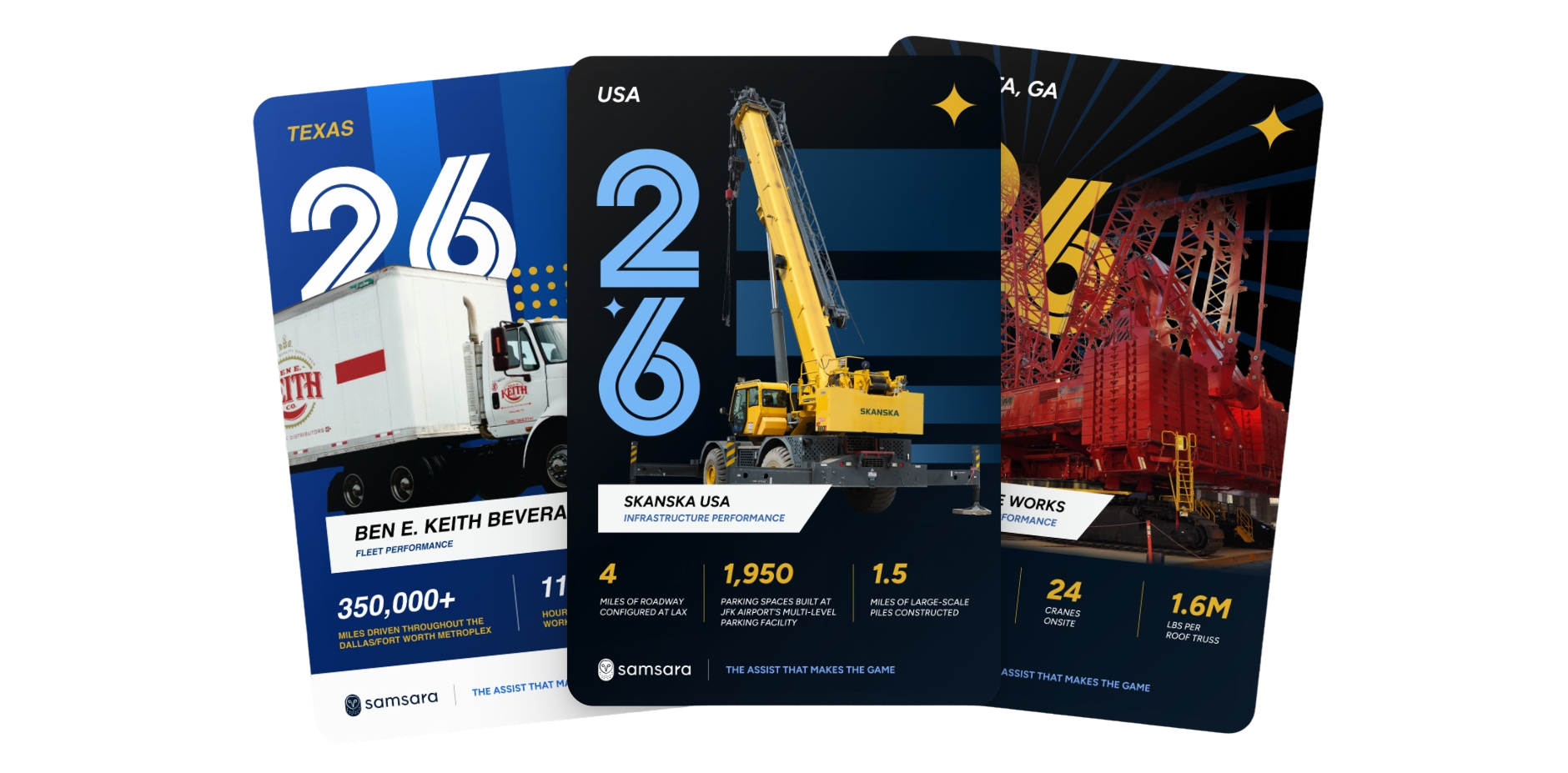
The team behind the tournament
We created a set of player cards celebrating the operators who made these matches happen and continue to keep them running smoothly. Each card highlights the work, the numbers and the people behind some of the most complex operations in the world. Explore our interactive map and player cards for each city to get to know the operators, how they’re making an impact and what sets them apart.
Meet the operators
The operations teams behind the tournament aren’t the only ones with stats worth celebrating. Every day, operators like you keep complex operations running safely and efficiently. Upload your photo, add your best stats and build your own personalised player card. Share it on social and remember to tag Samsara – we’ll choose a few of our favourites and share them over the next few weeks.
Create your player cardHow does your operation perform under pressure?
The teams running this tournament built systems that hold up under pressure, and there's a lot that any operation can learn from how they work. On 1 July, we're hosting a live webinar featuring these operators. Join us as they walk through how elite teams prepare for, manage and recover from demand at this scale.
Register now
Get the latest from Samsara
Subscribe nowRead more

The psychology of fleet fuel efficiency

Regional Staff Solutions Marketing Manager

How to help a driver in need
Regional Staff Solutions Marketing Manager

Introducing Samsara MCP: your data, inside of your team’s AI tooling

VP, Product Management

September product updates: 4 new Samsara releases to close gaps in your operation

Director, Product Marketing

How passenger fleets can prove their duty of care
Regional Staff Solutions Marketing Manager

August product updates: 5 new Samsara releases to help you turn insights into action
Director, Product Marketing

EBPMS explained: why compliance is the floor, not the ceiling

Group Manager, Product Marketing

Built by you, for you: The new Samsara Community

Principal Community Manager

Why fuel savings aren’t enough: how to protect your fleet's margins in 2026
Regional Staff Solutions Marketing Manager