Perspectives
Ace Tree Enterprise's Fleet Manager on staying emergency-ready while keeping daily operations moving
October 7, 2026

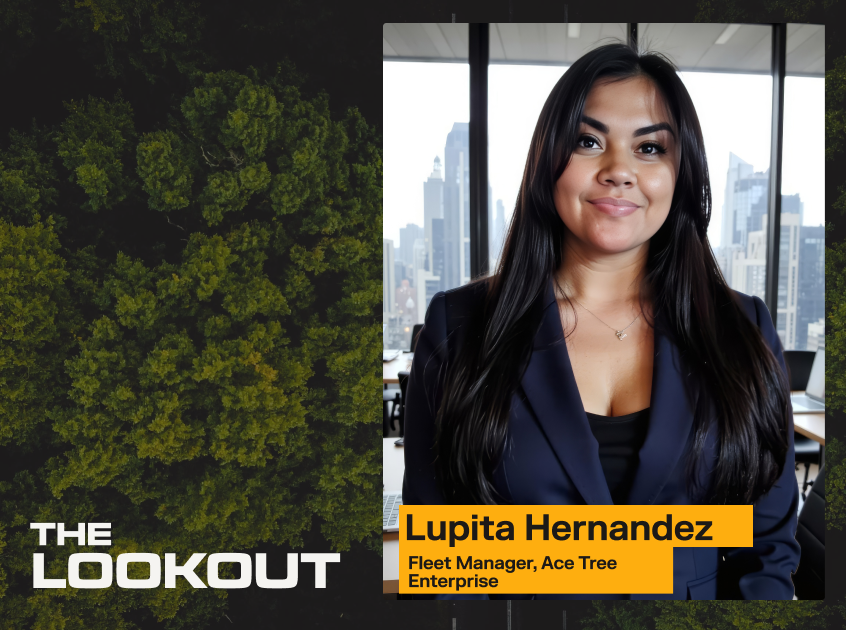
Fleet Manager, Ace Tree Enterprise
Get the latest from Samsara
Subscribe nowIf an emergency call came in tomorrow and dozens of your crews had to mobilize into a disaster zone, would you be ready to respond without disrupting the rest of your operation? It might be hard to picture right now, but there is a version of your operation that can answer yes with confidence: crews that mobilize without chaos, everyday work that doesn't miss a beat, and a team that trusts each other when it matters most. Getting there doesn't take anything extraordinary. It's built on ordinary days, and you can start today.
At Ace Tree Enterprise, a utility vegetation management company, where I work in fleet safety, we balance daily operations with emergency response. When disaster hits, our crews are among those called in to help restore the area, working in remote and sometimes dangerous conditions, while our everyday work has to keep moving. We stay ready by building trust across our teams, keeping real-time visibility on every crew, and making sure our people know the technology in their trucks is there to protect them. None of it was built specifically for an emergency. It was built for every regular day, which is exactly why it holds up when disaster strikes.
This is what it actually takes to be ready when the call comes, not just to respond, but to keep everyone safe once you're in it.
1. Build the trust long before you need it
If you asked me the single most important thing for handling an emergency well, it wouldn't be equipment—it would be collaboration. We hold weekly safety meetings, and our fleet, safety, and environmental teams stay in constant communication with each other, not just when something comes up, but as a standing habit. Our leadership is genuinely hands-on, out in the field, checking on crews themselves. By the time a real emergency arrives, that trust and communication is already the foundation you're standing on. You can't build it during the crisis. It has to already be there.
2. Let the technology be your crew's advocate, and respond in real time when they need it
Give your crews a fast way to flag trouble, and commit to answering every single time, even when the alert turns out to be nothing. Then, look for the moments the technology can prove someone's side of the story, because those moments are what win people over. When one of our drivers was clipped on a rainy freeway ramp by a car that lost control, he pressed the button on his dash cam immediately—we were able to respond instantly and clear his name.
The same footage and location history have cleared our drivers of property damage claims for streets we never even drove down. Let those stories circulate on their own, because they will, and don't be surprised when the buy-in starts showing up in unexpected ways. One of our safest, most experienced drivers discovered through his own footage that he was yawning more than he realized on certain days, and instead of getting defensive, he told his whole team about it. When your crews start flagging anything that feels off without hesitation, that's how you know the tool has become something they rely on rather than tolerate.
3. Keep live visibility so you can direct crews across terrain you can't just drive to
If your teams ever operate somewhere you can't just drive to yourself, make sure you have live visibility turned on before you need it, and don't keep it to yourself. Push it down the chain: give your foremen and supervisors their own view of where their crews are, so finding people stops being a round of phone calls asking, “Can you share your location?" Our fleet is over 200 vehicles, working everywhere from residential streets to mountain terrain to active fire areas during deployments. Each of our general foremen oversees about 15 crews, and each one has its own live map. Someone heading out to a crew can see they're already moving and adjust their plan without a single call. In restricted or remote zones, that shared picture is often the only real-time picture anyone has, and it may be the only one you get when it matters most.
4. Make room for the human toll of the work, not just the logistics
Check in on your people after the deployment ends, not just during it, and don't assume experience makes anyone immune. Some of our most seasoned crews, people who have seen a lot in this industry, told me months after helping restore a community hit hard by wildfire that the work still affected them emotionally. Build that check-in into your close-out process the same way you'd inspect the equipment when it comes back: ask how people are doing, listen to what they tell you, and treat it as part of readiness for the next call, because it is. This is a humbling industry, and taking care of the person is as much a part of the operation as taking care of the truck.
Interested in learning more about balancing daily operations with emergency preparedness? Listen to Lupita’s full conversation on Operator Grade, a Samsara podcast, where she goes deeper on what it takes to find success during high-stress situations. Listen wherever you get your podcasts: Spotify → | Apple →

Watch Video
Get the latest from Samsara
Subscribe nowRead more

Brenntag’s Supply Chain Manager on working backward to find the solution you're really after

Supply Chain Manager, Brenntag North America

Glazer's safety leader on what it takes to keep a safety culture thriving five years in

Safety Engineering Manager, Glazer's Beer & Beverage

– 8 min read
Connecting data to save millions: Lessons from Maxim Crane’s VP of Operations

Vice President at Maxim Crane Works

"We're actually a trucking company": How one construction firm rethought compliance from the ground up

DOT Compliance Manager, Emery Sapp & Sons

Garden City Public Schools' Transportation Director on modernizing maintenance operations for better efficiency

Transportation Director, Garden City Public Schools

“The best mechanics choose the best tools”: Inside Samsara Connected Maintenance

Senior Product Marketing Manager


When every minute matters: How digital innovation is transforming disaster response

Special Projects Administrator, Lodging Solutions

The financial case for public sector innovation

Public Sector Field Strategist