Perspectives
Brenntag’s Supply Chain Manager on working backward to find the solution you're really after
September 30, 2026

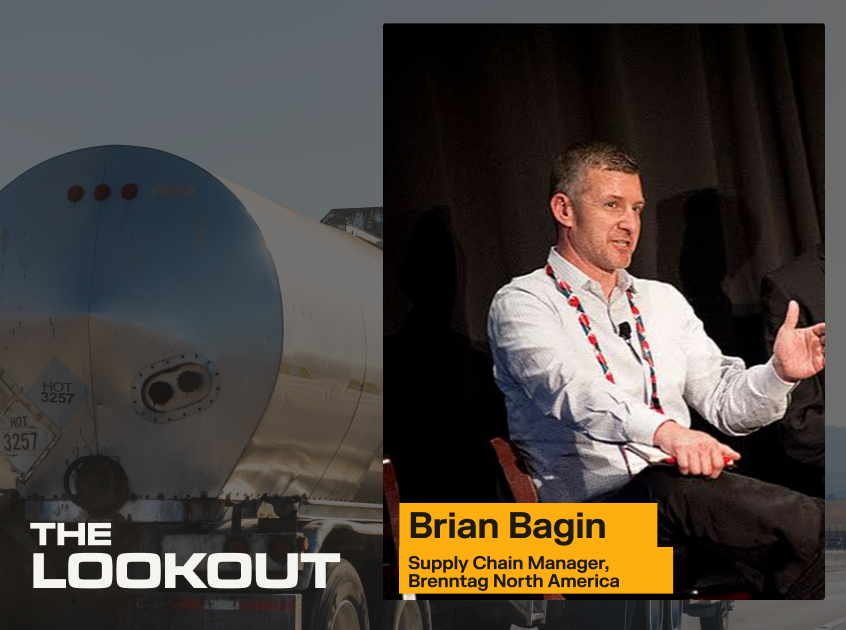
Supply Chain Manager, Brenntag North America
Get the latest from Samsara
Subscribe nowOne of the most valuable skills you can build in operations is learning to see past the request in front of you to the problem underneath it. It sounds small, but it changes everything: instead of delivering exactly what was asked and hoping it lands, you start finding solutions that solve more than anyone even knew to ask for. And once you've done it a few times, you'll never look at a request the same way again.
At Brenntag North America, the world's largest chemical distributor, I help oversee supply chain operations. Early on, I made it a habit to work backward from every request I received to find the real problem. That habit has helped us right-size our fleet, cut back on unnecessary truck purchases, and build processes people actually use instead of ignore. And none of it came from taking a request at face value.
This is how I've learned to separate what people ask for from the problem they're actually trying to solve.
1. Work backward from the request until you find the real problem
Before you build anything, sit down with the person asking and dig into what they're actually trying to accomplish. A request usually shows up already shaped into a solution: someone pictures the fix that would help them and describes that, which is a perfectly natural way to ask for help. Your job is to gently unshape it. Ask what decision they're trying to make, what they'd do with the answer, and what's frustrating them today. Someone might say, "I want to know when my trucks aren't moving, so build me this report," and working through those questions together gets you somewhere different, like a clearer view of overall fleet activity, which answers a question bigger than the original ask. Getting to the real question first is what makes the eventual solution actually stick.
2. Trace a solution as far upstream as it will go
Once you've found the real problem, don't fix it at the last place where it showed up. Keep asking where the information or the work originates, one step at a time, until you can't go any further back, because the farther upstream you fix something, the more downstream mess disappears with it. We had a request from customer service to automate a billing calculation on shipping paperwork, and we could have stopped at the point of delivery and called it done. Instead, we kept tracing: the numbers came from our quality lab, and before that, from the warehouse team receiving the product. Fixing it at intake automated the entire chain, all the way through to the proof of delivery that the driver hands the customer. Each step upstream you're willing to take multiplies what one solution can do.
3. Build your metrics around how the business actually works
Before you trust any metric, ask what real-world exceptions it might be missing, because the obvious definition is usually wrong. Take truck utilization: the obvious approach is to track which trucks are moving and which aren't. But a sitting truck isn't automatically a problem. Interrogate your raw number against how the business actually runs. Do all your regions work the same schedule? Is that truck someone's home base while they're on vacation, like a desk you wouldn't hand to someone else? Do you have open driver positions with no one to put in the seat, or specialty equipment that's only supposed to run occasionally? Each of those questions move your definition closer to reality. For us, that process landed on a concrete threshold: under 15 miles in a day counts as idle, enough room for a mechanic's test drive but not much else. And it's worth the effort, because a number everyone trusts is what turns a report into a decision. Ours let us right-size the fleet with confidence, buying closer to 70 new trucks in a cycle where we might otherwise have bought 100.
4. Change culture through steady pressure, not a mandate
Culture doesn't move because you announced a new tool exists. It moves through consistent reinforcement: showing people the value every time a use case comes up, and being genuinely available when they have questions, no matter how small. When we rolled out Connected Maintenance, I told everyone on the team to call me directly with any questions. Walking through a new workflow together once beats letting a small friction point quietly become a reason not to use the tool.
Interested in learning more about making technology really work for your organization? Listen to Brian’s full conversation on Operator Grade, a Samsara podcast, where he goes deeper on how to find solutions that stick. Listen wherever you get your podcasts: Spotify → | Apple →

Watch Video
Get the latest from Samsara
Subscribe nowRead more

Ferrellgas' Logistics Director on earning driver buy-in before the rollout, not after

Director of Logistics, Ferrellgas

Ace Tree Enterprise's Fleet Manager on staying emergency-ready while keeping daily operations moving

Fleet Manager, Ace Tree Enterprise

Glazer's safety leader on what it takes to keep a safety culture thriving five years in

Safety Engineering Manager, Glazer's Beer & Beverage

– 8 min read
Connecting data to save millions: Lessons from Maxim Crane’s VP of Operations

Vice President at Maxim Crane Works

"We're actually a trucking company": How one construction firm rethought compliance from the ground up

DOT Compliance Manager, Emery Sapp & Sons

Garden City Public Schools' Transportation Director on modernizing maintenance operations for better efficiency

Transportation Director, Garden City Public Schools

“The best mechanics choose the best tools”: Inside Samsara Connected Maintenance

Senior Product Marketing Manager


When every minute matters: How digital innovation is transforming disaster response

Special Projects Administrator, Lodging Solutions