Engineering at Samsara
The hardware challenge: Building the AI Multicam
November 29, 2025

Get the latest from Samsara
Subscribe nowBuilding hardware at Samsara means engineering for the physical world. Every product has to stand up to the realities of frontline operations: heat, vibration, weather, and years of daily use. The challenge isn't just getting a product to work, it's making sure it keeps working reliably in the field, at scale.
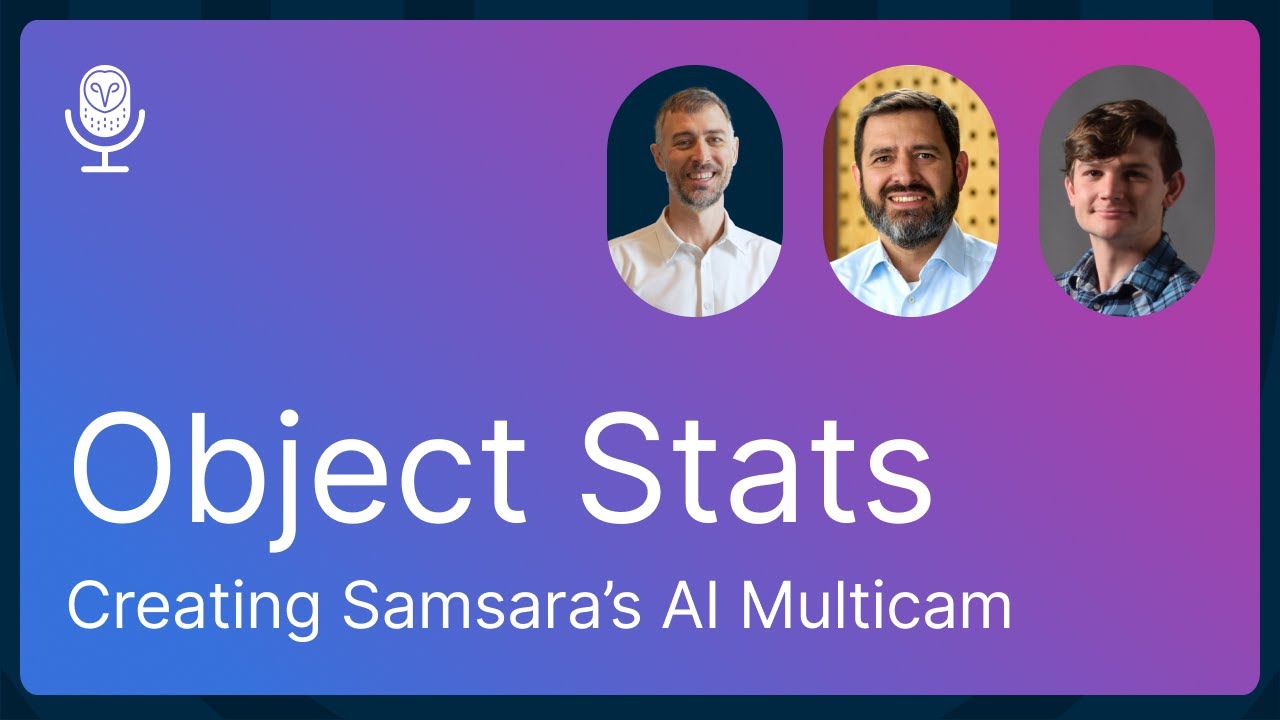
The AI Multicam adds four AI-powered camera feeds to give large commercial vehicles, like garbage trucks or school buses, full 360-degree visibility, with detections running on-device. In this episode of Object Stats, CTO of Hardware & Operations Ben Calderon and Mechanical Engineer Marshall Haltom walk through what it took to build and ship it.
Watch Video
🎧 Listen to the full episode now and subscribe to Object Stats wherever you get your podcasts: Apple, Spotify, Amazon Music.
Here's what we learned about building hardware at scale:
1. With hardware, the cost of being wrong is higher
Software teams iterate continuously. Hardware teams get one shot at a production design, so the process works differently: every prototype, lab test, and site visit exists to eliminate a known unknown before it becomes a problem at scale.
The team ran concurrent engineering tracks (firmware, mechanical, electrical, field validation) through structured "dress rehearsal" builds over a 6-to-18-month window. Marshall took prototype parts to customer lots and dry-fitted them on real vehicles to check assumptions that couldn't be confirmed in CAD. More features = more complexity = more risk. Every addition has to earn its place.
2. Future-proofing the hardware means designing for AI features that don't exist yet
Running detections across four simultaneous camera feeds on-device is a real compute challenge, and the team needed to future-proof the chip for models not yet built before final firmware was written.
The approach: simulate max CPU, NPU, and memory load in software, then run thermal testing against that ceiling. That gave them a clear picture of how much headroom they'd have for future AI capabilities without needing to redo hardware. The product also ships with expandable on-device storage, built in before anyone asked for it.
"Leaving ourselves enough margin for the unknown use cases that are yet to be built." — Marshall
3. Some things you can only learn in the field
Late in the program, deployments on school buses surfaced a problem: cameras from established vendors in that market draw significantly more power than the team had designed around. IR illuminators and heaters that hadn't shown up in earlier testing phases.
Two outcomes depending on the situation:
Firmware fix: pulse power delivery rather than run continuously, no hardware change needed
This case: required a bill-of-materials change, after the product was otherwise locked
The takeaway isn't that testing failed. It's that the process needs room to absorb late discoveries without derailing the program.
4. Getting to industry-leading reliability means studying the 1%, not just passing the 99%
Samsara's hardware return rates are among the lowest in the industry. Here are some of the tests our hardware is put through:
Thermal cycling: heat, cool, repeat thousands of times, re-verify all functions
Shock + vibration testing: qualify to industry standards, then beat them with margin
Pre-build simulation: structural and thermal simulation to identify failure-prone components before physical testing begins
Firmware simulation farms: banks of devices running synthetic video to validate detection pipelines at temperature extremes
Factory 100% inspection: every unit tested against electrical and mechanical pathways before it ships
Early Field Failure Analysis (EFA): any returned unit gets root-caused and fed back into engineering, post-launch
When you're deploying hardware across thousands of vehicles in real operating conditions, the gap between 'works in the lab' and 'works in the field' is where the most interesting engineering happens. That's what building at Samsara looks like.
Get the latest from Samsara
Subscribe nowRead more


When AI brings your loved one home safe

Vice President of Artificial Intelligence


What 100 billion miles taught a fuel model

VP, Software Engineering

Humans, Machines, and the Road Ahead: HumanX Reflections

Senior Vice President of Product

AI at the Edge: Stopping Bridge Collisions
VP, Software Engineering