Company News, Engineering at Samsara
Humans, Machines, and the Road Ahead: HumanX Reflections
April 30, 2026

Senior Vice President of Product
Get the latest from Samsara
Subscribe nowIf you live in San Francisco, Austin, or Phoenix, mobility has changed—seemingly overnight. You woke up to drones, autonomous vehicles, and delivery robots sharing asphalt with humans. This is the mixed-autonomy era, and it’s coming to your city next.
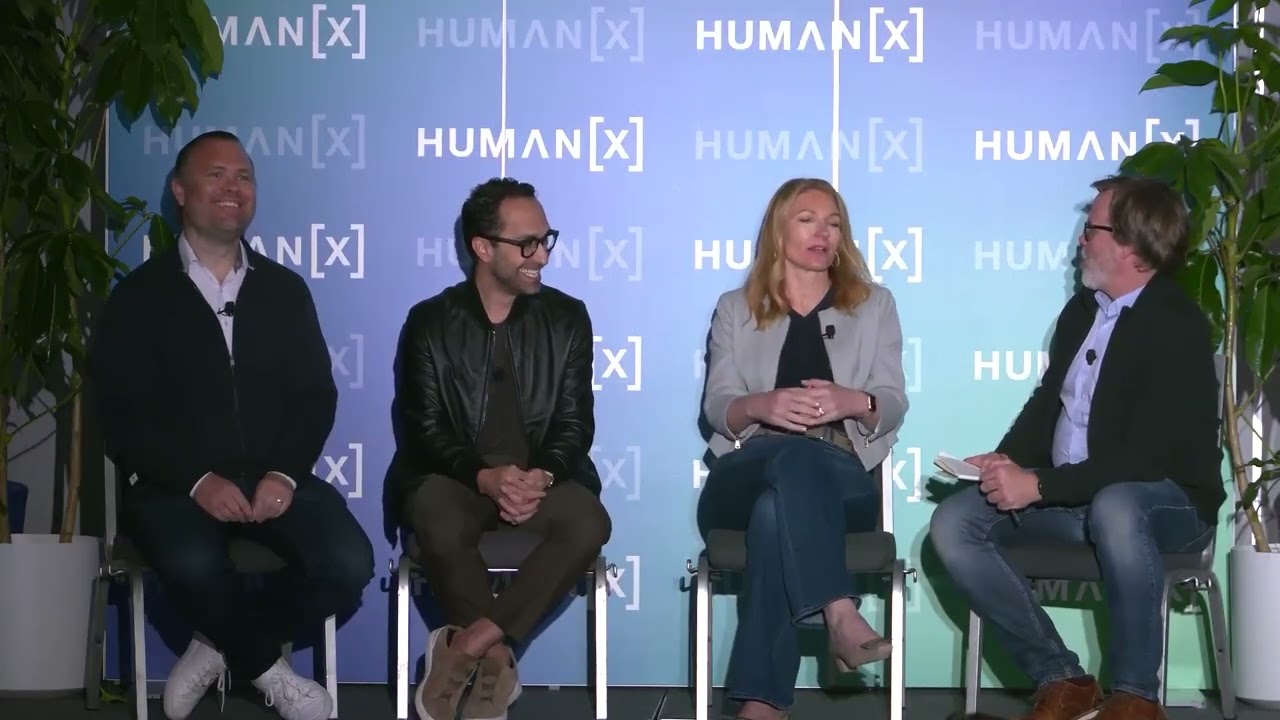
At HumanX, Ossa Fisher (president, Aurora), Ali Kashani (co-founder and CEO, Serve Robotics), and I sat down with Reed Albergotti (tech editor, Semafor) to dive into what the mixed-autonomy era means for the economy, supply chains, and frontline work.
Watch Video
Work evolves. It always has.
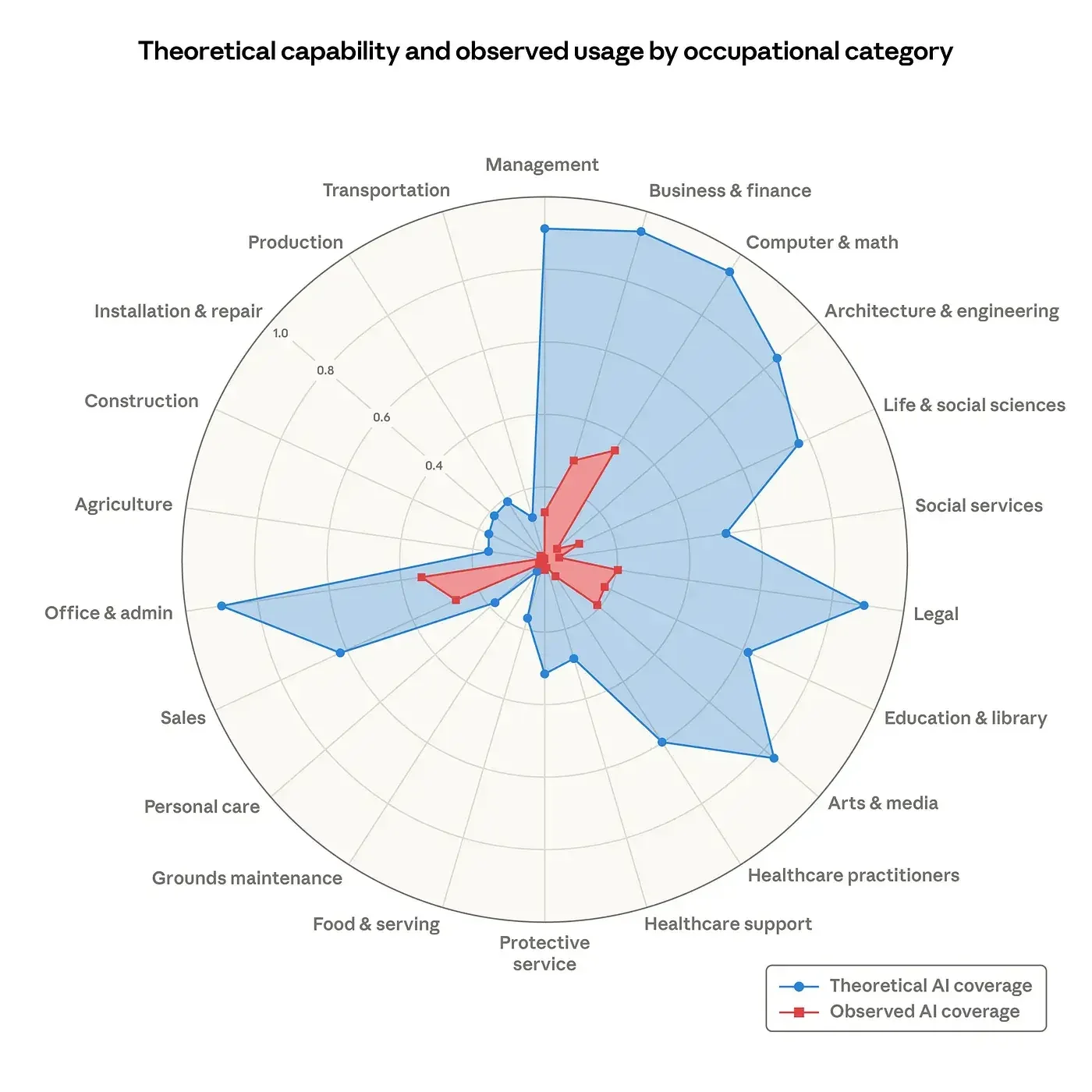
According to Anthropic’s Economic Index, physical jobs face less than 20% AI exposure. In sharp contrast, knowledge work is poised to experience 90% impact from AI. So what are the implications of automation and physical AI for frontline workers?
Source: Anthropic
Ali opened with a historical parallel. He asked if anyone knew about “knocker uppers.” As you can imagine, most of the crowd was unfamiliar with this job. He made the salient point that in industrial-era Britain this person knocked on people’s doors to wake people up. Ali’s point: technology makes us more productive, opening up space for a new class of jobs from hub operators to remote fleet monitors, AV dispatchers, and field technicians.
“A single cargo ship today with 20 people moves more goods than the entire 100,000-person British Navy did a couple hundred years ago. But shipping as a whole is so much larger and employs more people today than it ever did... the net of all technologies ever created is that we have the lowest unemployment humanity has ever experienced.”
Ali Kashani, Founder & CEO, Serve Robotics
Some routes may run autonomously, but the role of frontline workers will mostly evolve and get better. AI helps frontline workers navigate the real world more safely, with a proactive partner. Ultimately, as Ossa shared, concerns about job displacement echo the launch of the ATM in the 1980s, which helped create new banking jobs.
We build AI for the 2 billion frontline workers around the world. We’re entering a frontline work renaissance as knowledge workers flock to physical operations. Each year, the trucking industry experiences 90% turnover, so operators need to retain skilled labor by enabling workers. Real-world deployments of video, audio, and text-based agents into physical operations provide a proactive partner for humans.
The economics of humanoids
Taking a page from the first principles thinking, Ali stipulated that we’re at least five years away from humanoid robots at scale, because they’re prohibitively expensive. The Serve Robotics fleet costs thousands to deploy, compared to the millions a humanoid robot fleet would require. Ali argued that specialized robots for high volume applications deliver simpler, clearer ROI. Once specialized robots reach scale, then general-purpose robots will scale, but this will be an after-effect to specialized robots achieving scale.
Many of our physical operations customers deploy robots at scale today. But they come in the form of autonomous forklifts or mining equipment. They’re purpose-built machines. Whether it’s a humanoid or single-use robot, Samsara helps orchestrate machines.
Similarly, Aurora has developed their AI with extensibility in mind, opening the door for adjacent applications.
“We can work on any base platform, from big rigs to passenger cars. We were designed that way from the get go. We can see 4 football fields in advance of the vehicle, 360-degrees around. The extensibility of AI is huge, and we’re just beginning to see the promise of it.”
Ossa Fisher, President, Aurora
Training data is extensible
The main constraint for physical AI is real-world training data, which is hard to come by, unlike LLMs with text scraped from the internet. Waymo has driven more than 200 million fully autonomous miles on public roads. With road fatalities happening around every 100 million miles traveled, we are still early in compiling data at the scale global mobility demands.
Samsara covers 100 billion miles and helped prevent 380,000 accidents last year alone. Our scale of data with 25 trillion data points processed annually enables next-wave innovation like agents and automation. Edge cases that would never surface in a public dataset—a truck hydroplaning at 3am on a rural highway or a forklift operator’s near-miss in a dim warehouse—are what determines whether AI performs when it counts.
“The technology that we create doesn’t have to be the technology that we see today. We can be safer than humans. Why shouldn’t we? Especially when the economics work well on a fleet. We should absolutely demand that.”
Ali Kashani, Founder & CEO, Serve Robotics
Aurora uses private and public roads to test the Aurora Driver. Private roads allow them to test scenarios like blown tires that would be dangerous on public roads. They also deploy simulations to understand how the Aurora Driver responds in any situation. Before Aurora launched its driverless trucks, it delivered over 10,000 customer loads across three million autonomous miles on public roads.
“Because we have radar, lidar, and camera, that allows us to drive into a sunset with perfect visibility.”
Ossa Fisher, President, Aurora
With AVs on our roads and humanoid robots entering factories and warehouses at scale, managing mixed fleets safely and efficiently is becoming a defining challenge. Commercial autonomous vehicles, with Aurora leading the charge, are moving into long-haul, direct routes. At Samsara, we’re building the orchestration layer for the mixed-autonomy era — enabling humans and machines to move goods and people safely and efficiently.
Listening to sessions on AI for knowledge work at the conference, I kept coming back to how tangible the opportunity is for physical AI, how important deployment is for more than 40% of the world’s GDP, and how fortunate we are to be forging the future of frontline work with the industries that move the world.
Get the latest from Samsara
Subscribe nowRead more

Introducing Samsara MCP: your data, inside of your team’s AI tooling

VP, Product Management

Introducing Samsara Driver Perks, exclusive offers and discounts for professional drivers

Head of Corporate Marketing


Hats off to drivers: Why we’re celebrating professional drivers for an entire month
Head of Corporate Marketing

2 years at No. 1: Samsara sweeps G2 across fleet management, asset tracking, and maintenance

Sr. Director, Customer Marketing


Built by you, for you: The new Samsara Community

Principal Community Manager

We built a new brand the way we build everything at Samsara — with you

EVP, Chief Marketing Officer