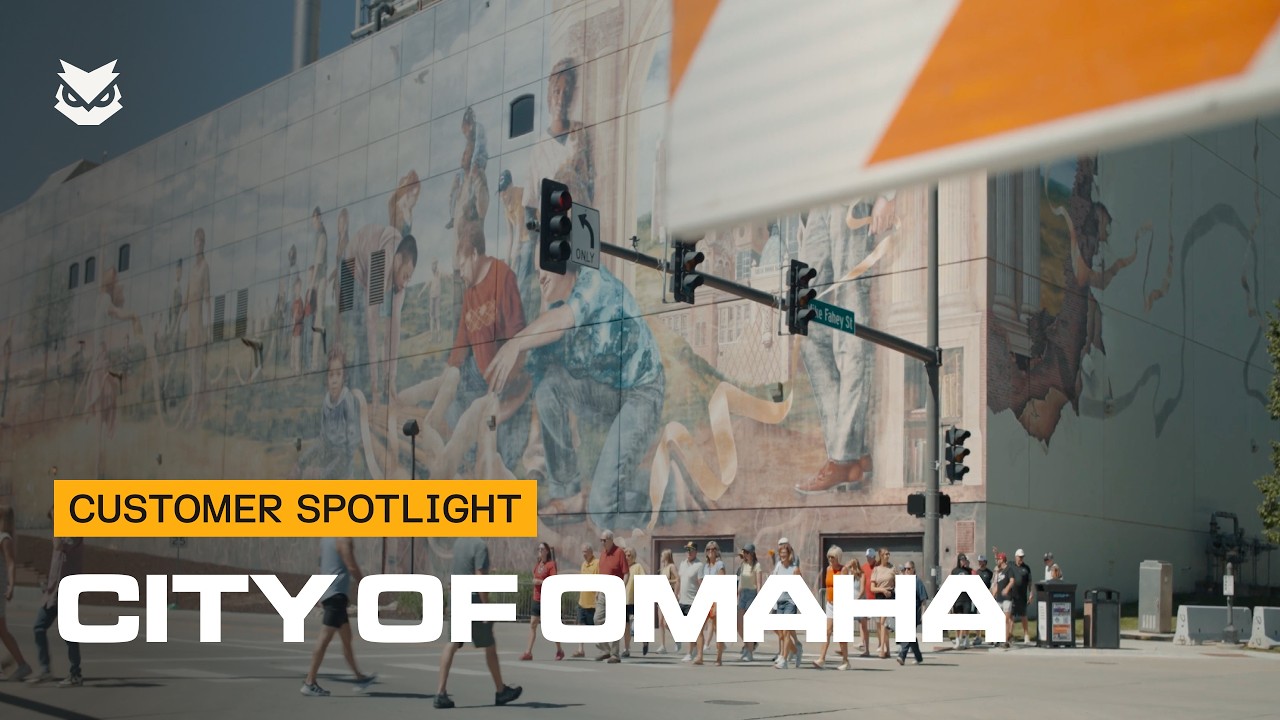
City of Omaha Case Study Header

Powered by the Samsara Connected Operations Platform

Meet the City of Omaha

5,000+ MILES MAINTAINED
227 EMPLOYEES
140+ VEHICLES

The Challenge

Legacy technology and paper-based processes create a lack of visibility

Omaha is the largest city in Nebraska with roughly 488,000 residents. The City's Public Works Department maintains more than 5,000 lane miles of pavement across 142 square miles, and their dedicated employees handle pothole repair, round-the-clock snow removal, and preparing roads for major events, such as the annual NCAA College World Series.

For years, the Department managed its operations on paper and with older automatic vehicle location (AVL) technology. Locating a truck, crew, or a piece of equipment was often a manual process. "To find something, someone usually had to drive out to a yard to physically look for it," said Steven Rue, Construction and Street Maintenance Engineer. "It was a waste of time and effort, and created a lot of inefficiency."

The Department couldn't see what was happening inside or around their vehicles, a gap that left the City at risk for false claims. In response, the Department sought to reinforce important safety habits, like seatbelt use and phone-free driving. "Safety is always our top priority, and it's our duty to make sure that our employees, and the community members we serve, get home safely at the end of the day," Rue said. The Department knew they needed a modern technology platform to give them better visibility into their operations.

The Solution

One platform for a unified view of road operations

The City of Omaha evaluated several vendors, including Verizon Connect, but Samsara provided a complete solution to meet the Department's needs. "Samsara's AI Dash Cams drew us to the solution because they detect risks, like missing seatbelts, and make it easy to roll that into improved coaching for our drivers," said Brandon Fisicaro, Street Maintenance Superintendent. "With other vendors, maybe they did one aspect really well, but we knew Samsara would have cameras, reporting, and everything else we needed."

Rolling out new technology across a unionized, 200+ person fleet required a thoughtful approach, so the Department started small. The team began with a five-vehicle pilot, one per each of their districts, to ensure a successful deployment across the fleet. "The pilot project was really key," said Rue. "It built driver comfort with in-cab cameras and helped us address union concerns before a citywide rollout. Thanks to that process, any issues have been minimal."

CAMERAS & VIDEO

Improving seat belt usage by an estimated 70%

With Samsara dual-facing AI Dash Cams, the Department now has the visibility they need to provide enhanced coaching for risky driver behaviors, such as rolling stops, distracted driving, lane departures, and drowsy driving. The impact has been significant: In the first three months of using Samsara, seatbelt usage rose an estimated 70%, and cell phone use dropped roughly 80%. AI Dash Cams have also transformed how the city investigates public complaints and accidents, cutting resolution time for disputed claims from weeks to days.

Learn more

Omaha Cameras & Video Section
FLEET TELEMATICS

Real-time telematics help recover $600,000 in salt costs

With Samsara, supervisors now have real-time vehicle location, route-timing, and spreader salt usage data across all five districts available in one dashboard. During snow events, foremen can pull up live locations and camera feeds instead of driving across the city to assess conditions. Improved visibility has enabled the Department to recover an estimated 30% of the City's annual $2 million salt budget, about $600,000, that can be reinvested into the fleet. In addition, the City has exceeded their snow level-of-service metrics for two consecutive years since deployment.

Learn more

Omaha Fleet Telematics Section
WORKFORCE MANAGEMENT

Digitizing processes to free up 520 administrative hours annually

The Department has used Samsara to digitize many of their work order and maintenance processes, which had traditionally been paper-based. Now, drivers use tablets to enter equipment, labor, and materials information for work orders directly into Samsara, freeing up an estimated 520 hours a year in administrative work.

Learn more

Omaha Workforce Management Section

Ready to team up?

We're ready when you are. Let's talk about what your operation needs.

Check our prices