What is the best ELD for trucking?
The best ELD for trucking helps fleets streamline Hours of Service (HOS) tracking, improve CSA scores, and simplify the driver experience. Samsara provides an FMCSA-registered and third-party certified ELD solution for full compliance in the U.S. and Canada. This enables fleets to accelerate IFTA reporting and prevent HOS violations with real-time notifications via the Samsara Driver App.
Samsara’s ELD Compliance solution offers intuitive tools that help you stay safe and compliant. Want to learn more? Share your email to get started.
Take your ELD compliance to the next level
Samsara is an FMCSA-registered and third-party certified ELD for full compliance.
ELD compliance
Stay compliant anywhere with automatic rulesets
Seamlessly stay compliant with flexible rulesets that automatically update based on your driver’s real-time GPS location.
Streamline ELD tracking with AI
Automate the most time-consuming tasks, such as annotating yard moves and managing unassigned HOS, with geofencing and AI-powered annotations.
Improve operational efficiency with seamless integrations
Easily connect your compliance data to existing systems across over 200 integrations, ensuring reporting accuracy, maximizing administrative efficiency, and enabling smarter, informed decisions.

Improve the driver experience with intuitive workflows
Guided workflows prompt drivers to complete tasks at the right time, ensuring they complete DVIRs and safety inspections, certify their HOS logs, and more.

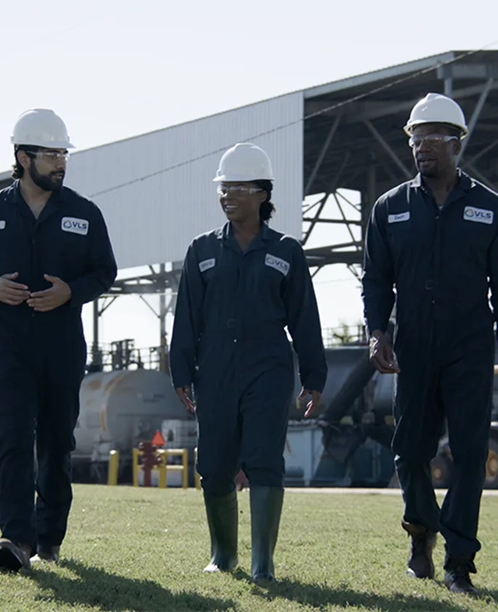
Customer Spotlight: VLS Environmental Solutions
Discover how VLS Environmental Solutions uses Samsara to make data-driven decisions to improve fleet safety, efficiency, and sustainability, aligning technology with their core environmental mission.

Watch Video

See how leaders are improving ELD compliance with Samsara.
See how leaders are improving routing and dispatch with Samsara.
Read more storiesLearn more about ELD Compliance
The Federal Motor Carrier Safety Administration (FMCSA)'s ELD mandate is a federal regulation that requires commercial motor vehicle drivers who are required to maintain records of duty status to use an electronic logging device (ELD) instead of paper logs. The mandate was established to improve road safety by reducing driver fatigue and eliminating falsified paper records.
Samsara's FMCSA-registered ELD platform automatically records driving time, syncs with real-time GPS to apply the correct ruleset for each driver's location, and connects compliance data to the back office through 200+ turnkey integrations, so fleet managers have a complete, real-time view of their fleet's compliance status without manual data entry or paper-based reporting.
For example, Sterling Crane Canada leveraged Samsara to improve compliance. After recognizing their paper-based workflows were inefficient and time-consuming, Sterling Crane Canada implemented Samsara Connected Workflows, saving $1.2 million in driver downtime while improving satisfaction and HOS compliance. With 30% of their fleet subject to the ELD mandate, they also streamlined DVIRs and HOS tracking and saved over $1.5 million in labor costs by eliminating unreliable apps.
Hours of service (HOS) violations are one of the most frequently cited driver infractions during DOT inspections, but they can be prevented using fleet management technology like Samsara.
With Samsara, fleets gain real-time visibility into driver hours and automated workflows that prompt drivers to act before a violation occurs. Samsara's Compliance Dashboard gives fleet managers real-time visibility into HOS status across every driver, so teams can identify risks and intervene before they reach a roadside inspection.
Some of the HOS regulations that Samsara can provide visibility into include:
11-Hour Driving Limit: Drivers may drive no more than 11 engine hours after 10 consecutive hours off duty.
14-Hour On-Duty Limit: Drivers cannot drive beyond the 14th consecutive hour after coming on duty, following 10 hours off duty. Off-duty time does not extend the 14-hour period.
30-Minute Break Requirement: Drivers must take a 30-minute break after 8 hours of driving. Since the 2020 HOS Final Rule, this break may be satisfied by off-duty time, sleeper berth time, or on-duty not-driving time.
60/70-Hour Limit: Drivers may not drive after 60 hours on duty in 7 consecutive days or 70 hours on duty in 8 consecutive days. The "week" resets after taking 34 consecutive hours off duty (known as the 34-Hour Restart).
Sleeper Berth Provision: Drivers can split the required 10 hours off duty, as long as one off-duty period is at least 8 consecutive hours in the sleeper berth, with another separate 2-hour period either off-duty or in the sleeper berth.
The FMCSA published the final ELD mandate rule in December 2015, with a phased enforcement timeline that began in December 2017 for most carriers and concluded in December 2019, when drivers using older automatic onboard recording devices (AOBRDs) were required to upgrade to fully compliant ELDs. Since December 2019, full ELD compliance has been required for all applicable commercial motor vehicle (CMV) operators.
Samsara has been FMCSA-registered since 2017 and has continued to expand its compliance platform to include automatic ruleset updates, AI-powered log management, and an interactive Driver App that brings ELD capabilities to any supported iOS or Android device. With Samsara, fleets can stay compliant as regulations evolve, without changing hardware or vendors.
Every HOS violation recorded during a DOT roadside inspection contributes points to a fleet's CSA score under the FMCSA's Safety Measurement System, specifically in the Hours of Service Compliance BASIC category. Serious violations, such as operating beyond the 11-hour driving limit, carry higher point weights and remain on a carrier's record for up to 24 months, affecting insurance premiums and relationships with freight brokers who screen carriers by CSA standing.
Samsara offers advanced tools for monitoring CSA scores and violations in real time, such as:
Real-time data and tracking: Get granular, real-time GPS visibility across vehicles, trailers, and assets, enabling faster, proactive decision-making and immediate response to incidents or risks.
Automated maintenance and health alerts: Continuously monitor critical systems like brakes, ABS, and tires while automating maintenance based on DVIRs, mileage, and diagnostics to prevent breakdowns and violations.
Compliance workflows and digital DVIRs: Streamline DOT compliance with integrated DVIRs and HOS logs, along with proactive alerts that help drivers and managers avoid violations and reduce audit risk.
Driver safety and coaching: Use Samsara AI Dash Cams and in-cab alerts to deliver real-time coaching, reduce risky behavior, and improve CSA scores through safer driving.
Consolidated analytics and reporting: Unify operational and compliance data into a single dashboard with automated and customizable reports to track performance over time.
Seamless integrations: Connect with TMS, maintenance, and risk platforms like McLeod, FourKites, MacroPoint, and SambaSafety to centralize and extend operational data.
Open API and App Marketplace: Enable real-time data sharing and custom workflows through an open API and integrations with tools like Kafka and FieldAlytics.
Customizable alerts and automated workflows: Deliver automated alerts for key events like violations or cargo status while enabling tailored workflows to proactively prevent operational issues.
For example, JRayl Transport leveraged Samsara to lower CSA scores, unlocking a 57% improvement in the CSA Crash Indicator category, a 71% improvement in the Unsafe Driving category, and a 31% improvement in the Vehicle Maintenance category in just one year.
Based on aggregated data, the 2025 Samsara Safety Report revealed that Samsara customers see better CSA scores. Comparing fleet performance prior to deploying Samsara, Samsara analyzed how customers’ publicly available BASIC scores changed from the 30 months prior to Samsara to the 30 months post-adoption, for fleets with 175+ vehicles. In aggregate, improving customers see:
43% improvement in Unsafe Driving score
57% improvement in HOS Compliance score
35% improvement in Vehicle Maintenance score
83% improvement in Controlled Substances/Alcohol score
59% improvement in Driver Fitness score
Non-compliance with the FMCSA's ELD mandate may result in costly penalties and fines, such as:
Civil penalties for ELD violations range from approximately $1,000 to $16,000+ per violation, depending on the severity and nature of the offense.
A driver found operating without a required ELD during a roadside inspection can be placed out of service immediately, taking the vehicle off the road until the issue is resolved.
Each out-of-service order and violation also flows into a fleet's CSA score, increasing regulatory scrutiny, raising insurance costs, and affecting a carrier's ability to win freight contracts.
Samsara's Compliance Dashboard and Driver Workflows prevent violations from reaching the roadside by giving managers real-time visibility into log status and automatically prompting drivers to complete required compliance tasks before dispatch, so issues are resolved at the yard, not on the road.
Drivers who operate a commercial motor vehicle (CMV) could be subject to the ELD rule. Commercial drivers who are required to maintain records of duty status (RODS) must comply with the ELD mandate.
CMVs are vehicles that are used for business purposes and travel interstate. In addition, they meet one of the following criteria:
Weigh more than 10,000 pounds.
Have a gross vehicle weight rating or a gross combination weight rating of more than 10,000 pounds.
Are designed to transport 16 or more non-paying passengers, including the driver.
Are designed to transport 9 or more paying passengers, including the driver.
Transport enough hazardous materials to legally require warning placards.
Under the ELD mandate, several categories of drivers and vehicles are exempt from ELD requirements:
Short-haul drivers: Those who operate within a limited radius and qualify for the short-haul exemption (no RODS required).
Limited RODS users: Drivers who use paper logs 8 days or fewer within a 30-day period.
Pre-2000 vehicles: Trucks with engines manufactured before model year 2000 (due to lack of compatible electronic data).
Driveaway-towaway operations: When the vehicle being driven is the commodity being delivered.
Certain agricultural operations: Some farm and ranch drivers operating within designated agricultural exemptions.
The FMCSA does not require proprietary ELD devices. Drivers can use iOS or Android smartphones and tablets as part of a compliant ELD solution, as long as the software is FMCSA-registered and meets all technical requirements.
The Samsara Driver App is free and available on any supported iOS or Android device, giving fleets flexibility in hardware and reducing procurement costs. The Driver App connects to Samsara's FMCSA-registered Vehicle Gateway through a vehicle's diagnostic port, providing the engine data the ELD mandate requires. The Vehicle Gateway's built-in WiFi hotspot keeps driver devices connected and compliant even in areas with limited cellular service, eliminating the need for separate cellular data plans.
Customers achieve significant return on investment (ROI) from leveraging Samsara ELD compliance, driving improvements in efficiency and cost-savings. Here are a few examples:
Jett Express: Maintained zero preventable accidents, improved their CSA score by 6% through reduced HOS violations, and cut investigation times from days to minutes with instant video retrieval after their previous provider repeatedly provided incorrect driver records during a DOT audit that jeopardized their compliance standing. Safety Director Brad Hackett stated, "Samsara is a one-stop shop for us, it's our system of record. We now manage compliance, safety, and location tracking in one place."
JRayl Transport: Improved CSA Unsafe Driving score by 71%, improved CSA Crash Indicator score by 57%, and exonerated more than 20 drivers from false claims across a family-owned transportation and logistics company operating in 48 states with 360+ drivers and 350+ vehicles.
Emery Sapp & Sons: Improved their FMCSA score by 11%, reduced DOT-reportable incidents by 40% YoY, cut mobile device use by 65%, and reduced at-fault accidents by 25% after deploying Samsara's ELD solution alongside Connected Training and AI Dash Cams across a 100% employee-owned heavy civil contractor with many employees new to commercial driving.
DHL: Improved their CSA score by 10%, reduced driver turnover by 50%, reduced harsh driving incidents by 65%, cut accidents by 26%, and reduced accident-related costs by 49% after consolidating seven separate point solutions including ELD compliance, trip management, and DVIRs into one platform across a logistics operation serving 220+ countries delivering 1.8B parcels each year.
Quality Custom Distribution: Achieved a five-year low CSA score, reduced their ISS score, and completely eliminated drowsy driving crashes within six months of activating Drowsiness Detection alerts after replacing a previous ELD solution.
ArcBest: Reduced time spent managing unassigned HOS by 50% and decreased preventable road accidents by 13% after deploying 32 new API endpoints that connected operations between their internal systems and Samsara.
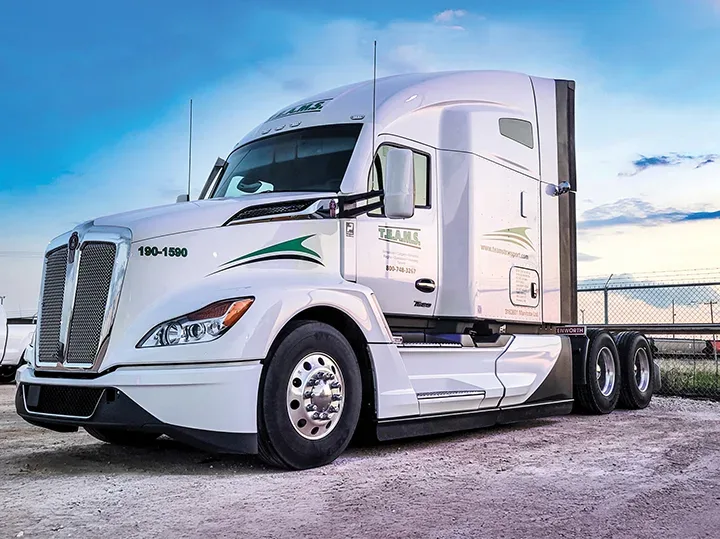
TEAMS Transport: Reduced HOS violations by 63%, improved their Manitoba Carrier Profile safety score by 26%, saved over $1M in insurance-related costs by cutting insurance claims by 39%, saved $389,000 in trailer maintenance and tire-related repairs, and recovered 100% of previously lost pallet jacks saving over $19,000 across a mid-sized carrier operating 230+ trucks and 550+ trailers.
VLS Environmental Solutions: Achieved a 25% decrease in HOS issues using Connected Workflows for Hours of Service, saved over $800,000 in annual auto claims, extended vehicle operational life by 15%, reduced fleet-wide CO2 emissions by 10%, and saved over $350,000 annually in fuel costs across 500+ vehicles at 50+ locations.
Sterling Crane Canada: Deployed Samsara specifically in response to the Canadian ELD mandate and phasing out of 3G networks, saved $1.2M in driver downtime through Connected Workflows that improved HOS compliance, saved $1.5M in labor costs by eliminating time on unreliable apps, saved $517K+ in annual maintenance labor, saved 10,000+ technician hours, and achieved estimated overall maintenance savings of $3M+ across 16 branches throughout Canada.
Jordan Carriers: Reduced safety events by 50%, decreased drivers needing daily coaching by 93%, cut the time needed to set up new drivers and assign training courses by 50%, and managed HOS compliance for over 1,000 drivers through the Driver App alongside safety and training workflows across a fleet of 800 vehicles and 800 drivers spanning the eastern half of the United States.
Joyride Logistics: Switched from a legacy ELD provider after identifying HOS data inconsistencies, used Samsara as their single source of truth to power a proprietary driver app via open API, drove 13M miles incident-free, improved driver retention by 28% in one year, and gave drivers real-time transparency into their compliance performance across a fleet of 250 trucks and 300+ trailers.
Texas Fueling Services: Reduced time to complete audit processes from days to just a few hours after deploying Samsara Connected Training, reduced fuel spills by 111% over three years, and decreased spill volume by over 400% across one of the largest petroleum distribution companies in North America.
C Blackburn: Replaced three technology providers including Geotab and Netradyne with one unified Samsara platform, eliminating the fragmented compliance workflows and data silos that had previously made incident investigation and driver coaching inefficient across a family-run contractor hauling mail for USPS for over 50 years.
Intermex Transportation: Initially selected Geotab to meet the federal ELD mandate but switched to Samsara after finding the system difficult to use, achieving zero insurance claims since deploying AI Multicam, reducing speeding by 39%, and reducing collision risk by 14% across 25 buses and vans operating across 5 states.
Hogland Transfer Company: Achieved a 95% driver retention rate, improved their overall safety score from 96 to 99, secured insurance premiums 10% below market average, saved an estimated $80K in incident-related costs, reduced incident investigation time by 52%, and achieved 42% growth in new business after building a data-driven compliance and safety culture powered by Samsara across a veteran-owned Washington state trucking and third-party logistics provider.


![WR-FY26 Fleet Telematics [Proven Impact - Sterling Crane Canada Image]](http://images.ctfassets.net/bx9krvy0u3sx/3vAJQfpD1yxA8EsAcfWyEX/48b4df4a59723c4a84a618471c0fdeee/Sterliing_Crane-image.png?w=472&q=80)